V&A
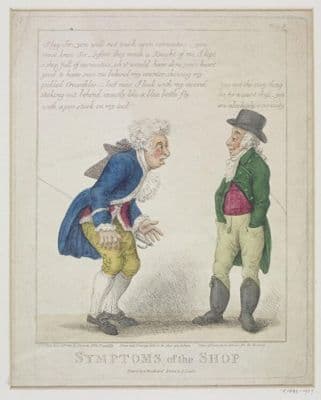
Blue Tailcoat Satirical Fashion Print
Empire / Regency · 1800s · British
Material
paper with watercolor
Culture
British
Influences
Regency menswear silhouette · British caricature tradition
This satirical print depicts two male figures in contrasting dress styles typical of early 19th century British fashion. The left figure wears a blue coat with yellow waistcoat and breeches, his posture hunched and deferential. The right figure stands upright in a green coat, light-colored breeches, and tall black hat, representing fashionable gentlemanly attire. The print includes handwritten text above the figures, characteristic of period caricature publications. The clothing details reflect the high-waisted, fitted silhouettes of Regency menswear, with the contrast between the figures' dress and deportment serving the satirical narrative about social class and commercial relationships in early 1800s London society.
coattight fithigh neckhip length
Connected To
Worn with·breechesWorn with·coat
SHARED90 years · cross-culture · cross-category
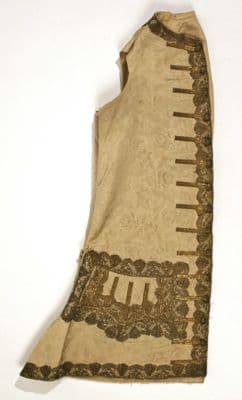
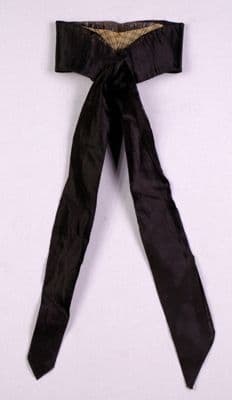
The quilted golden silk of this 18th-century waistcoat and the blue tailcoat in this Regency-era satirical print share the DNA of masculine formality, but the satire reveals how drastically that formality had shifted.
Echoes Across Time
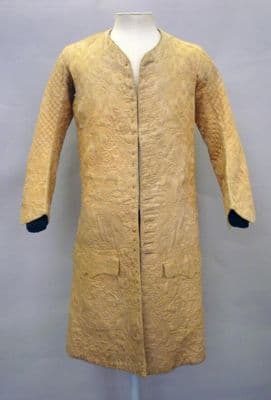
Rococo → Empire / Regency · 90yr61%
SHARED
The quilted golden silk of this 18th-century waistcoat and the blue tailcoat in this Regency-era satirical print share the DNA of masculine formality, but the satire reveals how drastically that formality had shifted.
Worn with·breechesWorn with·coat
Rococo → Empire / Regency
Pull the Thread→
Follow this garment wherever the graph leads