SMITHSONIAN
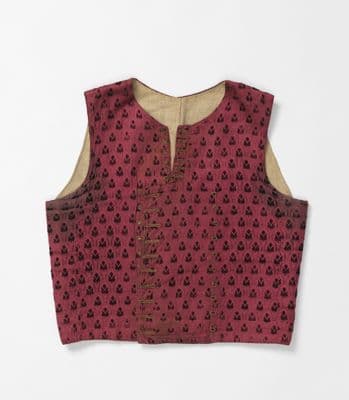
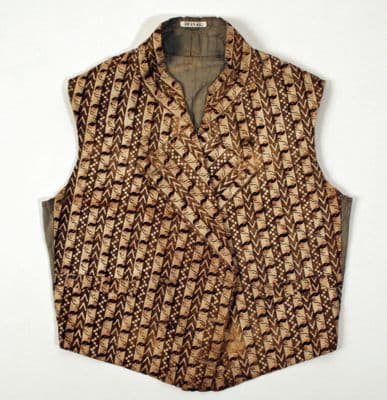
Burgundy Silk Velvet Waistcoat with Geometric Pattern
Empire / Regency · 1820s · English
Production
handmade
Material
silk velvet
Culture
English
A sleeveless waistcoat in burgundy silk velvet featuring an all-over small-scale geometric pattern in black. The garment displays typical Regency construction with a fitted silhouette that would sit close to the torso. The front opening shows multiple button closures running down the center front, characteristic of early 19th-century menswear. The neckline is cut in a shallow V-shape with minimal lapels. The back appears to be lined in cream-colored fabric, likely linen or cotton. The velvet shows a lustrous surface with the geometric motifs creating textural contrast through the pile direction. This represents the refined tailoring and luxurious materials favored by gentlemen during the Regency period.
veststraightv-neckhip length
Connected To
70%
Worn with·breechesWorn with·coatWorn with·shirt
SHARED70 years · cross-culture
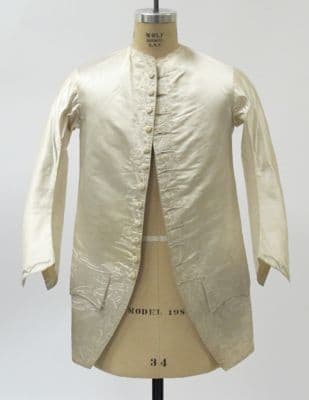
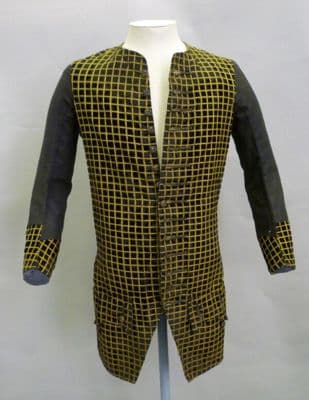
These waistcoats reveal how men's fashion moved from Rococo exuberance to Regency restraint while keeping its essential DNA intact. The earlier piece flaunts a bold yellow grid against black velvet with that characteristic 18th-century length that skims the hips, while the burgundy successor has shrunk to a trim Empire silhouette, its tiny scattered motifs whispered where the older garment shouted.
Worn with·breechesWorn with·coatWorn with·shirt
SHARED60 years · cross-culture
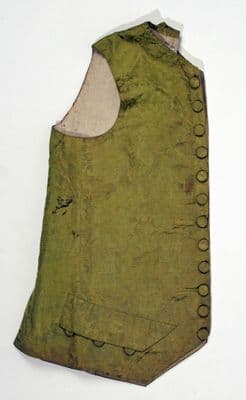
These waistcoats reveal how the male silhouette tightened across continents and decades, moving from the cream silk's generous 18th-century cut—with its flared skirts and full sleeves designed to fill out a coat—to the burgundy velvet's body-conscious Empire line that hugs the torso like second skin. The earlier Chinese example still thinks in terms of volume and ceremony, while the later English piece anticipates the Victorian obsession with the fitted male form.
Worn with·breechesWorn with·coatWorn with·shirt
SHARED30 years · cross-culture
These waistcoats bookend the death of masculine ornament — the burgundy piece still reveling in silk velvet's sensual surface and that tiny geometric print that catches light like scattered jewels, while the olive green survivor looks almost penitent in its plain weave, its only decoration the relentless march of self-covered buttons down the front.
69%
Worn with·breechesWorn with·coatWorn with·shirt
SHARED80 years · cross-culture
These waistcoats share the 18th-century obsession with surface pattern as a mark of refinement, but they speak different languages of luxury. The earlier rococo vest drowns in an all-over floral print that reads almost like wallpaper—the kind of busy botanical excess that made French taste synonymous with decorative abundance. By contrast, the burgundy Empire-era waistcoat deploys its geometric dots with neoclassical restraint, each motif precisely spaced like a gentleman's argument.
Echoes Across Time
Empire / Regency → Rococo · 70yr70%
SHARED
These waistcoats reveal how men's fashion moved from Rococo exuberance to Regency restraint while keeping its essential DNA intact. The earlier piece flaunts a bold yellow grid against black velvet with that characteristic 18th-century length that skims the hips, while the burgundy successor has shrunk to a trim Empire silhouette, its tiny scattered motifs whispered where the older garment shouted.
Worn with·breechesWorn with·coatWorn with·shirt
Pull the Thread→
Follow this garment wherever the graph leads