V&A
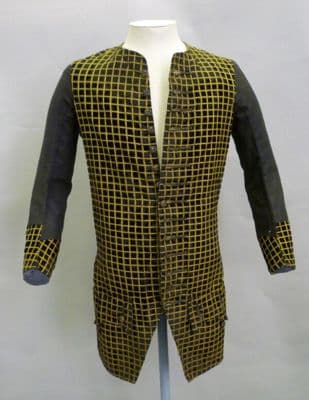
Black Silk Velvet Sleeved Waistcoat Yellow Check
Rococo · 1750s · British
Production
handmade
Material
silk velvet
Culture
British
This mid-18th century sleeved waistcoat displays the characteristic long-line silhouette of Rococo menswear, extending to mid-thigh with fitted sleeves and a close-cut body. The garment features black silk velvet construction with a distinctive yellow geometric grid pattern covering the front panels and sleeve cuffs. The waistcoat opens down the center front with what appears to be button closure, typical of the period's formal construction. The contrasting plain black sleeves and back create visual emphasis on the decorative front. This type of sleeved waistcoat served as an essential layer in 18th-century men's dress, worn under a coat and representing the period's taste for rich textiles and geometric ornamentation in formal masculine attire.
vesttight fitcollarlesship length
Connected To
70%
Worn with·breechesWorn with·coatWorn with·shirt
SHARED70 years · cross-culture
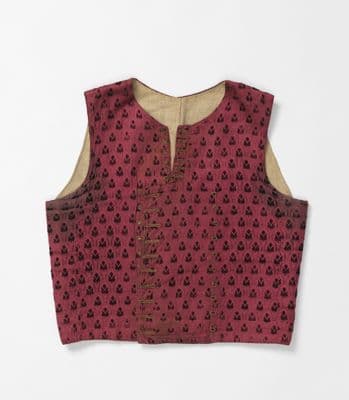
These waistcoats reveal how men's fashion moved from Rococo exuberance to Regency restraint while keeping its essential DNA intact. The earlier piece flaunts a bold yellow grid against black velvet with that characteristic 18th-century length that skims the hips, while the burgundy successor has shrunk to a trim Empire silhouette, its tiny scattered motifs whispered where the older garment shouted.
Echoes Across Time
Empire / Regency → Rococo · 70yr70%
SHARED
These waistcoats reveal how men's fashion moved from Rococo exuberance to Regency restraint while keeping its essential DNA intact. The earlier piece flaunts a bold yellow grid against black velvet with that characteristic 18th-century length that skims the hips, while the burgundy successor has shrunk to a trim Empire silhouette, its tiny scattered motifs whispered where the older garment shouted.
Worn with·breechesWorn with·coatWorn with·shirt
Pull the Thread→
Follow this garment wherever the graph leads