THE MET
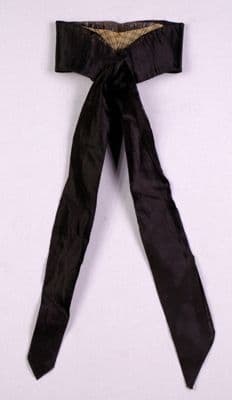
Black Silk Stock with Tan Leather Trim
Rococo · 1780s-1810s · American
Production
handmade
Material
silk with leather trim
Culture
American
Influences
European gentleman's cravat tradition
A formal gentleman's stock consisting of a wide black silk band with contrasting tan leather or buff-colored fabric trim at the neckline. The stock features long tails designed to wrap around the neck and tie in front, typical of 18th-century masculine neckwear. The construction shows careful tailoring with clean edges and precise stitching. The contrast between the dark silk body and lighter trim creates visual interest while maintaining the restrained elegance expected of colonial American gentleman's attire. The proportions and styling reflect the transition from earlier cravat styles to the more structured neckwear that would dominate later decades.
tie
Connected To
Worn with·coatWorn with·shirt
SHARED130 years · cross-culture · cross-category
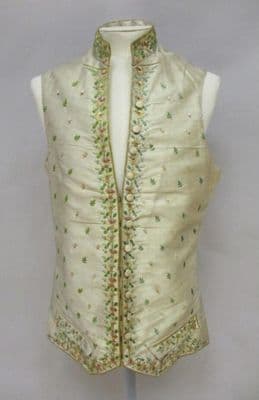
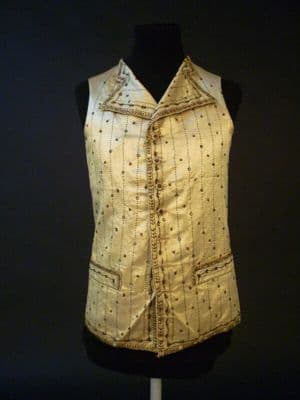
That black silk stock with its buttery leather trim speaks the same language of masculine restraint as the ivory waistcoat's delicate embroidered sprigs—both are exercises in controlled opulence, where luxury whispers rather than shouts.
Text78%
Image74%
Entity30%
Worn with·coatWorn with·waistcoat
SHARED60 years · cross-culture · cross-category
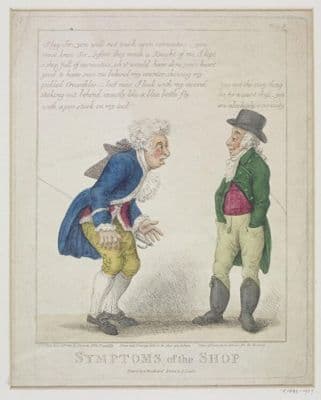
That black silk stock with its butter-soft leather trim represents the height of 18th-century masculine restraint—a neck-hugging band that forced the wearer into ramrod posture, transforming every gentleman into a portrait of rigid propriety. The satirical print captures the aftermath: by the early 1800s, that formal stranglehold had loosened into flowing cravats and softer neckwear, allowing the blue-coated dandy to bow and gesticulate with theatrical freedom.
Worn with·coatWorn with·shirt
SHARED50 years · cross-culture · cross-category
These two pieces trace the evolution of masculine restraint across the Atlantic and half a century. The black silk stock with its subtle leather piping represents the kind of understated elegance that American gentlemen adopted from European court dress, while the ivory waistcoat's delicate chenille dots and quilted texture shows how British men were already moving toward the more subdued palette that would define the next century.
Worn with·shirtWorn with·waistcoat
SHARED80 years · cross-culture · cross-category
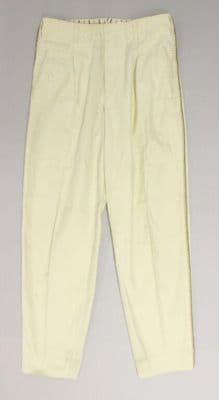
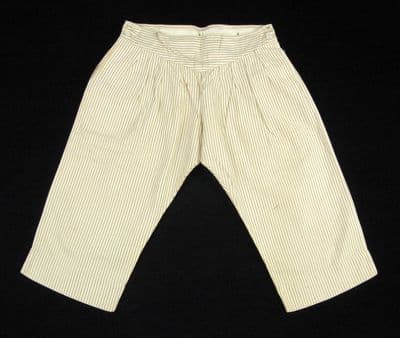
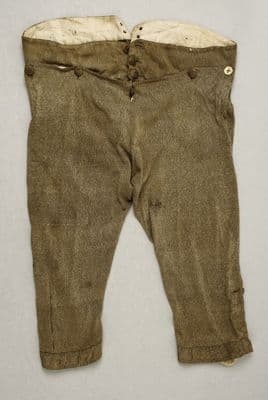
These two pieces reveal how male elegance once depended on the careful orchestration of multiple garments, each with its own sculptural logic. The black silk stock's dramatic bow and contrasting leather trim creates the same kind of studied artifice as the olive breeches' high waistband and button fly—both garments are architectural exercises in how fabric can reshape the male body through precise tailoring and deliberate volume.
Pull the Thread→
Follow this garment wherever the graph leads