THE MET
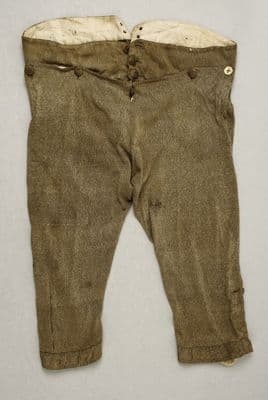
Olive Green Silk Knee-Length Breeches
Romantic · 1820s · Italian
Production
handmade
Material
silk
Culture
Italian
These knee-length breeches feature a fitted silhouette through the thigh that tapers to a band just below the knee. The olive green silk fabric shows considerable wear and aging, with visible creasing and discoloration. The waistband is constructed with a cream-colored lining or facing that contrasts with the main fabric. A front fall closure is secured with buttons, typical of early 19th-century men's breeches construction. The knee bands would have been fastened with ties or buckles to secure the garment over stockings. The overall cut reflects the transitional period when breeches were giving way to full-length trousers in men's fashion.
pantspegbelow the knee
Connected To
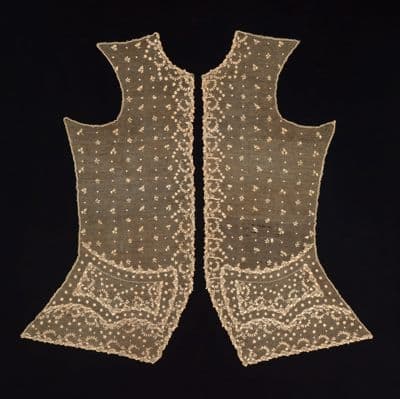
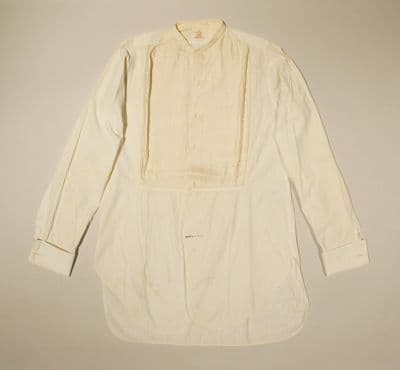
Worn with·shirtWorn with·waistcoat
SHARED80 years · cross-culture · cross-category
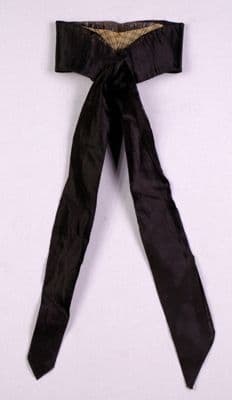
These two pieces reveal how male elegance once depended on the careful orchestration of multiple garments, each with its own sculptural logic. The black silk stock's dramatic bow and contrasting leather trim creates the same kind of studied artifice as the olive breeches' high waistband and button fly—both garments are architectural exercises in how fabric can reshape the male body through precise tailoring and deliberate volume.
Text65%
Image75%
Entity27%
Worn with·shirtWorn with·waistcoat
SHARED30 years · cross-culture
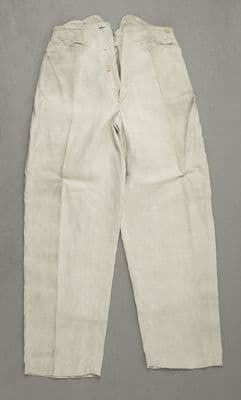
These two pairs of trousers trace the democratic evolution of menswear across the Atlantic and three decades. The olive silk knee breeches, with their aristocratic fall-front closure and refined proportions, represent the last gasp of European court dress—notice how they're cut to disappear beneath a waistcoat, designed for a world of rigid social hierarchies.
Worn with·shirt
SHARED30 years · cross-culture · cross-category
Text77%
Image82%
Worn with·waistcoat
SHARED80 years · cross-culture · cross-category
Text54%
Image75%
Pull the Thread→
Follow this garment wherever the graph leads