THE MET
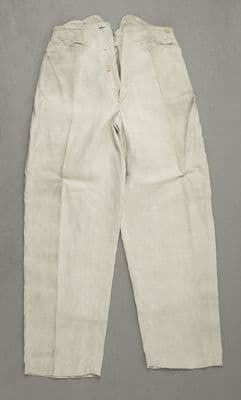
Cream Cotton Linen Blend Straight Work Trousers
Victorian Early / Crinoline · 1850s · American
Production
handmade
Material
cotton linen blend
Culture
American
These mid-19th century men's trousers feature a straight-leg silhouette with a natural waistline and relaxed fit through the leg. Constructed from a cream-colored cotton linen blend, the fabric appears to have a plain weave with a slightly textured surface typical of period workwear fabrics. The trousers show evidence of a button fly closure and side seam construction. The leg opening appears moderately wide, consistent with 1850s masculine fashion when trousers began transitioning from the tight-fitting styles of earlier decades to more comfortable proportions. The natural fiber blend would have provided durability and breathability for daily wear during the Victorian era.
pantsstraightfloor length
Connected To
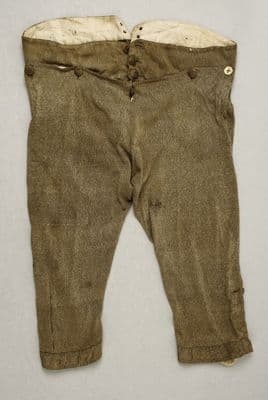
Worn with·shirtWorn with·waistcoat
SHARED30 years · cross-culture
These two pairs of trousers trace the democratic evolution of menswear across the Atlantic and three decades. The olive silk knee breeches, with their aristocratic fall-front closure and refined proportions, represent the last gasp of European court dress—notice how they're cut to disappear beneath a waistcoat, designed for a world of rigid social hierarchies.
Text66%
Image87%
Entity27%
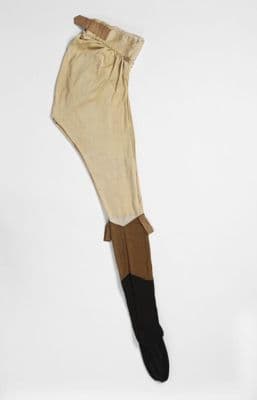
Worn with·shirtWorn with·waistcoat
SHARED50 years · cross-culture
These cream-colored leg coverings reveal how men's intimate dressing evolved across fifty years of radical social change. The earlier silk pantaloons, with their fitted calves and stirrup straps designed to keep them taut under boots, belong to the Regency dandy's obsession with a smooth, sculpted silhouette—every wrinkle was a failure of grooming.
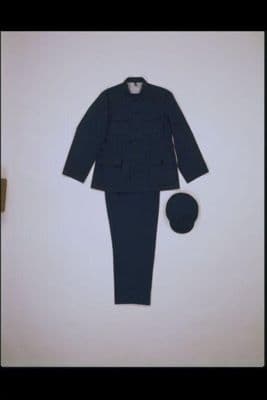
Worn with·jacket
SHARED120 years · cross-culture
Text53%
Image73%
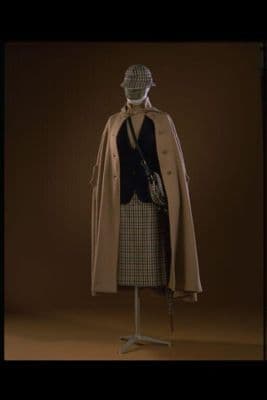
Worn with·jacket
SHARED120 years · cross-culture · cross-category
Text54%
Image72%
Pull the Thread→
Follow this garment wherever the graph leads