V&A
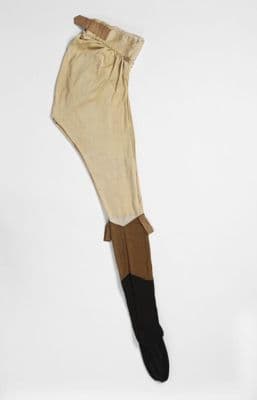
Cream Silk Machine Knitted Men's Pantaloons
Empire / Regency · 1800s · English
Production
ready-to-wear
Material
silk
Culture
English
Influences
neoclassical masculine ideals
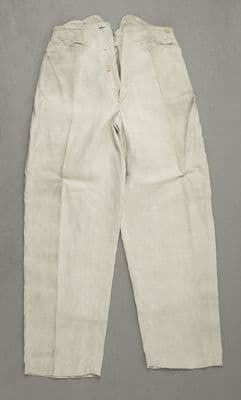
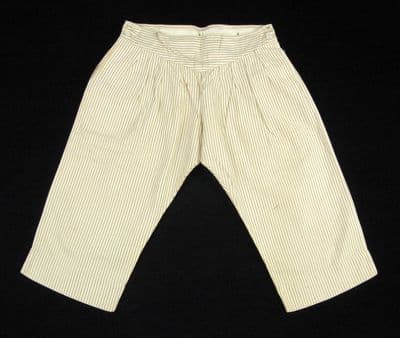
These men's pantaloons demonstrate the Empire/Regency period's preference for close-fitting leg garments that replaced knee breeches. The cream silk construction shows machine knitting technique, creating a smooth, form-fitting silhouette from waist to ankle. The garment features a high waistband typical of the era, with the fabric tapering closely down the leg. Brown leather reinforcement panels are visible at the ankle area, while black stirrup straps pass under the foot to maintain the taut leg line. This stirrup system was essential for achieving the fashionable smooth appearance over boots, eliminating wrinkles and maintaining the neoclassical ideal of clean, unbroken lines that defined masculine fashion during this transitional period.
pantspegfloor length
Connected To
Worn with·shirtWorn with·waistcoat
SHARED20 years · cross-culture · cross-category
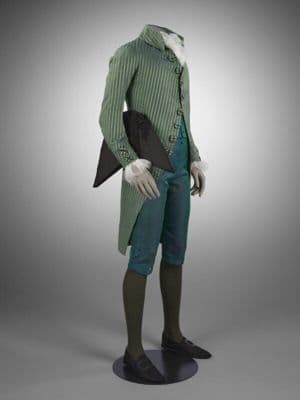
The green-striped coat's knife-sharp tailoring and the cream silk pantaloons' body-skimming cut both speak the same Neoclassical language — clean lines that reject the fussy ornamentation of the previous century. What connects them across two decades isn't just their shared silk luxury, but how both garments cling to the body's natural form: the coat's fitted torso and cutaway tails, the pantaloons' second-skin knit that maps every muscle.
Pull the Thread→
Follow this garment wherever the graph leads