THE MET
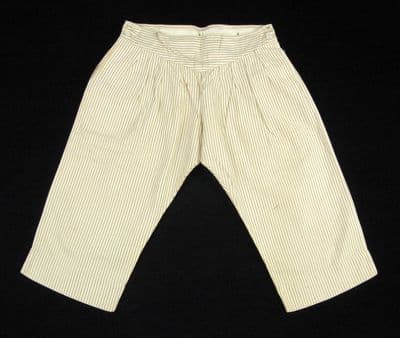
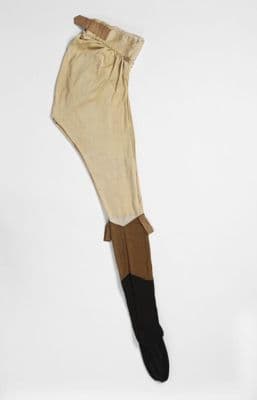
Cream Cotton Pinstripe Knickerbockers with Peg Silhouette
Victorian Early / Crinoline · 1850s · American
Production
handmade
Material
cotton
Culture
American
These mid-19th century men's trousers feature a distinctive vertical pinstripe pattern in cream cotton. The garment displays a high-waisted construction with extensive gathering at the waistband, creating fullness through the hip area that tapers to a straight leg. The waistband appears to have button or tie closures at the center front. The lightweight cotton fabric and pale coloration suggest these were designed for warm weather wear. The pinstripe pattern runs consistently down the length of the garment, creating vertical lines that were fashionable during the Victorian era. The cut reflects the period's preference for looser-fitting men's casual wear, distinct from the more fitted formal trousers of the same period.
pantspegbelow the knee
Connected To
Worn with·shirtWorn with·waistcoat
SHARED110 years · cross-category
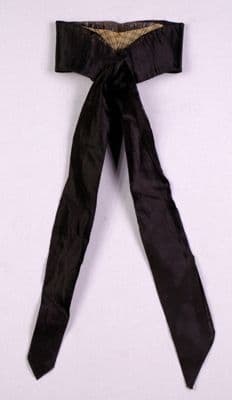
The black silk stock with its leather-trimmed neckband and the cream pinstriped knickerbockers represent two moments when men's clothing demanded precise fit around specific body points—the throat and the waist. Both garments rely on gathered fabric that creates volume (the stock's flowing tails, the knickerbockers' bloused legs) while maintaining control through strategic constriction, whether by the leather band or the knee ties.
Text60%
Image65%
Entity27%
58%
Worn with·shirtWorn with·waistcoat
SHARED50 years · cross-culture
These cream-colored leg coverings, separated by half a century and an ocean, reveal how men's intimate garments evolved from the skin-hugging silk stockings of Regency England to the looser, more practical cotton knickerbockers of Victorian America.
58%
Worn with·shirtWorn with·waistcoat
SHARED150 years · cross-culture · cross-category
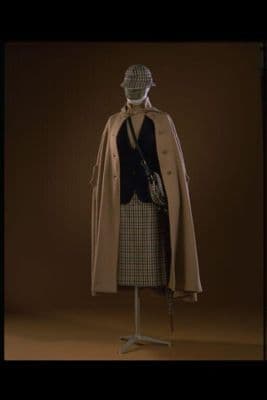
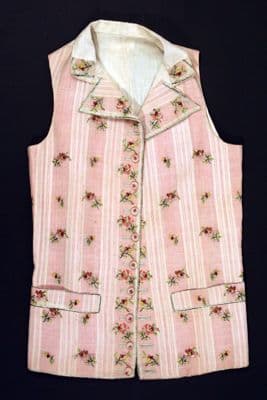
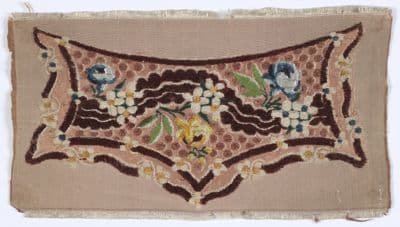
The baroque waistcoat pocket's exuberant needlework—those sinuous stems and scattered blooms dancing across silk velvet—and the Victorian knickerbockers' crisp pinstripes represent two wildly different approaches to masculine ornamentation, separated by 150 years and a revolution in taste.
53%
Worn with·jacketTechnique·machine-weaving
SHARED120 years · cross-culture
Text47%
Pull the Thread→
Follow this garment wherever the graph leads