THE MET
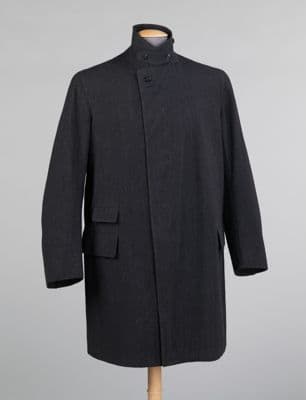
Charcoal Gray Wool Single-Breasted Overcoat
Edwardian · 1900s · American
Production
ready-to-wear
Material
wool
Culture
American
A charcoal gray wool overcoat displaying characteristic Edwardian masculine tailoring. The garment features a high stand collar that can be worn buttoned close to the neck, typical of early 1900s outerwear. The single-breasted front closes with concealed buttons, creating a clean vertical line. Two large patch pockets sit at hip level, providing both function and visual weight. The coat extends to mid-thigh length with a straight, boxy silhouette that reflects the period's preference for substantial, protective outerwear. The sleeves are cut full through the shoulder and arm, allowing for layering over suit jackets. The wool appears to be a medium-weight fabric with a smooth finish, suitable for urban professional wear during the transitional period between Victorian formality and emerging modern simplicity.
coatstraighthigh neckknee length
Connected To
Worn with·trousersWorn with·waistcoat
SHARED70 years
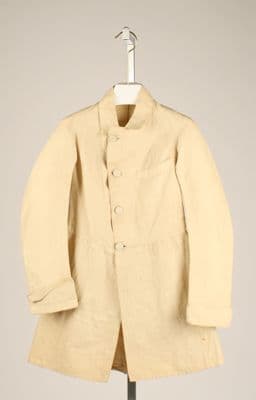
These two coats reveal how the masculine silhouette evolved from the fitted, wasp-waisted drama of the 1840s frock coat to the streamlined practicality of early 20th-century outerwear. The cream cotton coat's nipped waist, flared skirt, and decorative button stance gave way to the charcoal overcoat's clean lines and understated functionality—same stand collar DNA, but the later coat strips away all the peacocking.
Pull the Thread→
Follow this garment wherever the graph leads