V&A
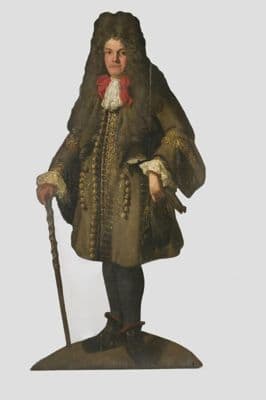
Olive Green Wool Coat with Gold Braiding
Baroque · 1690s · English
Production
handmade
Material
wool broadcloth
Culture
English
Influences
French court fashion · Louis XIV styling
A late 17th-century gentleman's ensemble featuring a knee-length coat in olive green wool broadcloth with extensive gold braiding or embroidered trim along the front edges, cuffs, and pocket flaps. The coat has a fitted bodice that flares into full skirts, characteristic of the period's silhouette. Underneath is visible a lighter-colored waistcoat or vest. The figure wears a full periwig in dark brown curls typical of the 1690s, white linen cravat at the neck, and dark stockings. A walking cane completes the ensemble, indicating gentlemanly status. This is a painted wooden dummy board figure used for interior decoration.
coatloose fitknee length
Connected To
Influences·French court fashionTechnique·hand-embroidery
SHARED60 years · cross-culture · cross-category
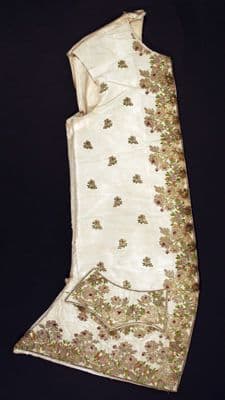
These two garments speak the same language of aristocratic excess, just with different accents. The waistcoat's delicate scattered florals and the coat's dense gold braiding both deploy surface ornament as social armor—one whispering wealth through silk brocade's subtle luxury, the other shouting it through military-inspired frogging that transforms a civilian into a commander.
Text78%
Image63%
Entity29%
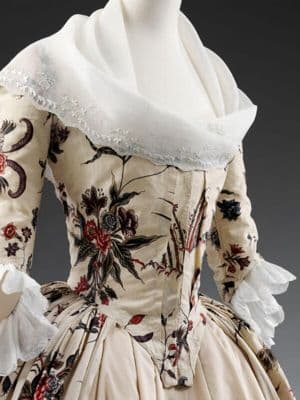
Influences·French court fashionTechnique·hand-embroidery
SHARED70 years · cross-culture · cross-category
The delicate floral embroidery cascading down this 18th-century sleeve and the military-inspired braiding on that olive coat represent two faces of the same obsession: the French court's stranglehold on European taste. Where the earlier Baroque coat borrows Louis XIV's martial grandeur—all that gold trim marching down the front like campaign ribbons—the Rococo sleeve whispers Marie Antoinette's pastoral fantasies, those scattered blooms as studied in their artlessness as a Fragonard painting.
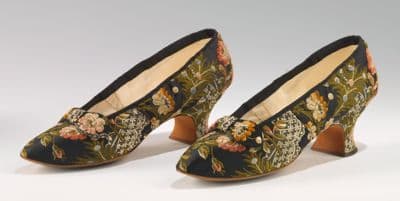
Influences·French court fashion
SHARED60 years · cross-culture · cross-category
These olive brocade slippers and the gentleman's gold-braided coat speak the same baroque language of European court luxury, separated by decades but united in their devotion to rich, earthy olive tones and metallic embellishment. The shoes' delicate floral brocade and curved Louis heel echo the coat's elaborate frogging and ceremonial weight—both designed for bodies that moved through gilded rooms where appearance was power.
Text
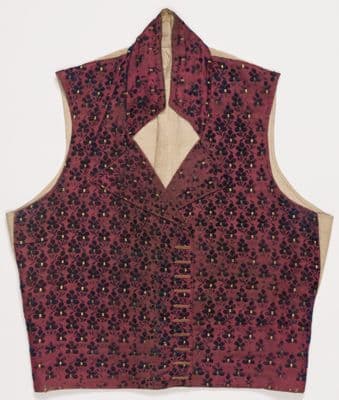
Worn with·cravat
SHARED110 years · cross-culture · cross-category
Text77%
Image65%
Pull the Thread→
Follow this garment wherever the graph leads