THE MET
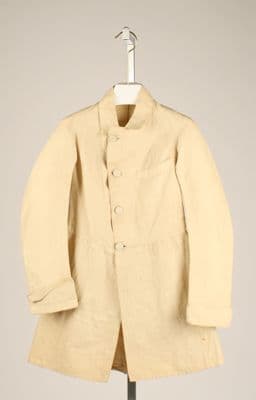
Cream Cotton Frock Coat with Fitted Bodice
Romantic · 1830s · American
Production
handmade
Material
cotton
Culture
American
Influences
Empire period military tailoring · English country gentleman dress
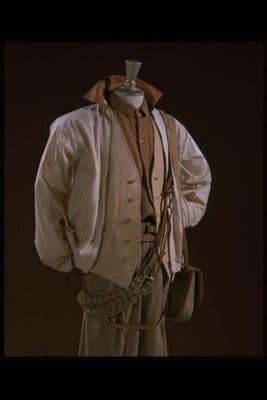
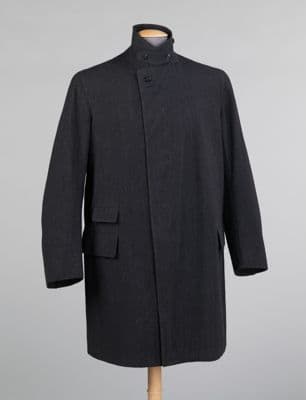
A cream-colored cotton frock coat displaying the characteristic silhouette of 1830s menswear. The garment features a fitted bodice that extends into a knee-length flared skirt, creating the distinctive waisted profile of Romantic period tailoring. The coat has a high, standing collar and appears to fasten with multiple buttons down the front. The sleeves are set-in with a natural shoulder line, and the overall construction demonstrates the period's emphasis on a defined waistline for men. The cotton fabric appears to have a smooth, substantial weight typical of formal daywear textiles of the era. The coat's proportions reflect the Romantic period's departure from earlier Empire styles toward more structured, tailored forms.
coatstraighthigh neckknee length
Connected To
Worn with·trousersWorn with·waistcoat
SHARED160 years · cross-culture · cross-category
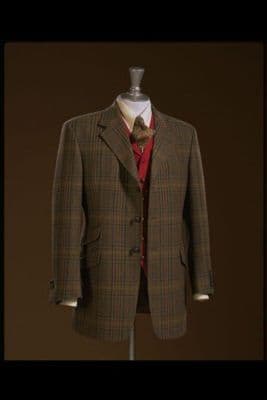
The cream frock coat's high button stance and fitted waist echo forward to the contemporary three-piece suit's structured silhouette, both garments understanding that masculine elegance lives in the tension between formality and the body's natural line. What separates them isn't just 160 years, but an entire philosophical shift: the Romantic era's frock coat with its soft, almost feminine curves giving way to the modern suit's sharper, more geometric interpretation of tailored authority.
Pull the Thread→
Follow this garment wherever the graph leads