2020s · 2020s · British
Production
ready-to-wear
Material
wool blend
Culture
British
Movement
Quiet Luxury
Influences
Savile Row tailoring · British suiting tradition
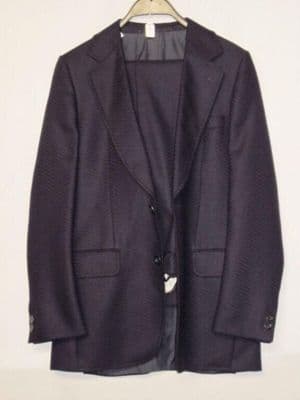
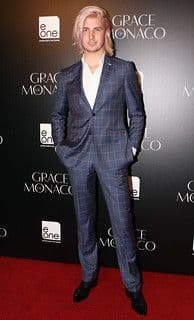
A contemporary three-piece suit featuring a navy blue base with light blue and white windowpane check pattern. The jacket displays classic British tailoring with notched lapels, structured shoulders, and a fitted silhouette. The waistcoat underneath creates a layered formal look typical of modern luxury menswear. The pattern consists of large-scale rectangular checks formed by intersecting lines, creating a sophisticated grid effect across the wool blend fabric. The suit exemplifies quiet luxury principles through its understated elegance, premium construction, and refined color palette that signals quality without overt branding or flashy details.
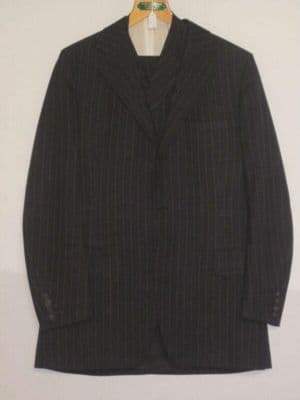
Both jackets speak the same Savile Row dialect, but with a half-century accent shift. The vintage piece on the right carries the authority of 1970s boardroom armor — that wide-shouldered, structured silhouette that made men look like they could close deals from across the room.


Both jackets speak the same Savile Row dialect, but with a half-century accent shift. The vintage piece on the right carries the authority of 1970s boardroom armor — that wide-shouldered, structured silhouette that made men look like they could close deals from across the room.

Follow this garment wherever the graph leads

These two looks capture the quiet luxury movement's split personality: the navy windowpane blazer represents its daytime face—that studied nonchalance of expensive cloth cut with deliberate understatement—while the charcoal tuxedo with its knife-sharp satin lapels shows its evening alter ego, where restraint becomes a form of peacocking.
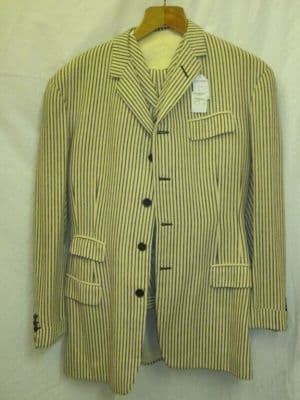
The navy windowpane check blazer and that olive pinstripe three-piece suit are separated by six decades but united by the British obsession with turning geometry into good breeding. Where the '60s suit uses tight pinstripes to create a lean, almost mod silhouette—notice how those vertical lines slice through the jacket's boxy frame—the contemporary blazer opts for windowpane checks that feel more relaxed, more American-influenced in their scale and spacing.
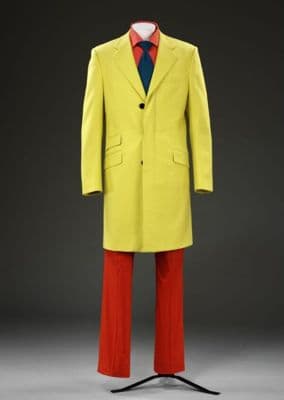
The navy windowpane check blazer's restrained geometry and the yellow-red suit's carnival-bright palette represent two poles of menswear risk-taking — one whispers rebellion through subtle pattern, the other shouts it through pure color. Both pieces demand confidence from their wearers, but where the blazer relies on the sophisticated tension of its grid against navy wool, the yellow coat throws caution entirely to the wind with its acidic hue and crimson trouser pairing.

The navy windowpane check blazer and that olive pinstripe three-piece suit are separated by six decades but united by the British obsession with turning geometry into good breeding. Where the '60s suit uses tight pinstripes to create a lean, almost mod silhouette—notice how those vertical lines slice through the jacket's boxy frame—the contemporary blazer opts for windowpane checks that feel more relaxed, more American-influenced in their scale and spacing.