2010s · 1990s · British
Designer
Daks-Simpson
Production
ready-to-wear
Material
cotton
Culture
British
Movement
Normcore
Influences
Savile Row tailoring · Scottish glen check
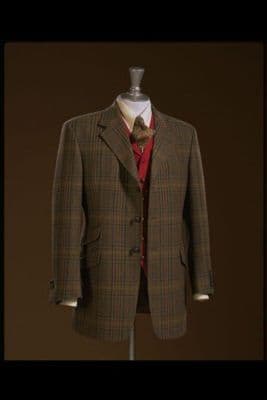
A three-piece suit displayed on a dress form featuring a brown and tan plaid wool jacket with notched lapels, flap pockets, and three-button closure. The matching waistcoat beneath shows a burgundy red color, creating contrast against the earth-toned plaid pattern. A white dress shirt with spread collar is visible at the neckline. The jacket demonstrates classic British tailoring with structured shoulders, fitted waist suppression, and traditional proportions. The plaid pattern appears to be a glen check or similar traditional Scottish weave in muted autumn tones. The overall silhouette reflects 1990s menswear's return to classic tailoring after the oversized styles of the 1980s.


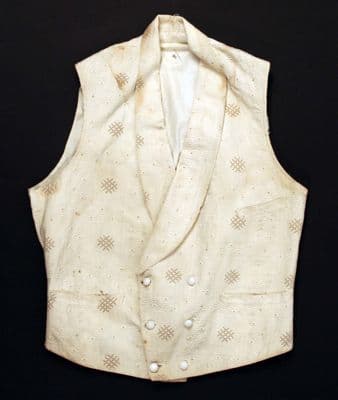
The cream waistcoat's double-breasted front and high, shawl-like lapels speak the same formal language as the contemporary three-piece suit's layered vest, both built on the Victorian principle that a gentleman's torso requires structured architecture.

Follow this garment wherever the graph leads
The cream waistcoat's double-breasted front and high, shawl-like lapels speak the same formal language as the contemporary three-piece suit's layered vest, both built on the Victorian principle that a gentleman's torso requires structured architecture.
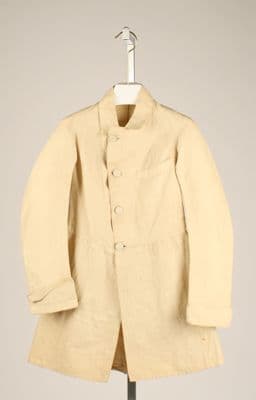
The cream frock coat's high button stance and fitted waist echo forward to the contemporary three-piece suit's structured silhouette, both garments understanding that masculine elegance lives in the tension between formality and the body's natural line. What separates them isn't just 160 years, but an entire philosophical shift: the Romantic era's frock coat with its soft, almost feminine curves giving way to the modern suit's sharper, more geometric interpretation of tailored authority.
These two pieces reveal how British tailoring's democratic impulse has quietly revolutionized menswear over three decades.
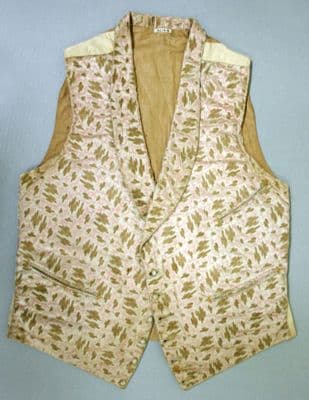
These pieces share the DNA of English country dressing, but they're separated by a century of social upheaval that transformed who gets to dress like a gentleman. The Victorian vest's delicate botanical brocade speaks to an era when such finery required leisure time and inherited wealth—this is what you wore when you didn't work with your hands.

The cream frock coat's high button stance and fitted waist echo forward to the contemporary three-piece suit's structured silhouette, both garments understanding that masculine elegance lives in the tension between formality and the body's natural line. What separates them isn't just 160 years, but an entire philosophical shift: the Romantic era's frock coat with its soft, almost feminine curves giving way to the modern suit's sharper, more geometric interpretation of tailored authority.