THE MET
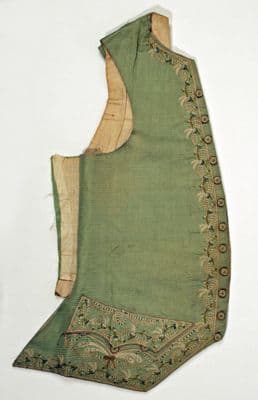
Sage Green Silk Gentleman's Fitted Waistcoat
Rococo · 1750s · European
Production
handmade
Material
silk
Culture
European
Influences
French court fashion · Rococo decorative arts
This gentleman's waistcoat displays the characteristic cut of mid-18th century menswear with a fitted silhouette that would have extended to the hip. The sage green silk ground is decorated with elaborate gold metallic embroidery forming scrolling botanical motifs along the front edges and hem. The embroidered border features intricate floral and foliate designs worked in metallic threads, creating a rich contrast against the plain silk body. The garment shows typical Rococo period construction with a deep V-neckline, fitted waist, and would have been worn over a shirt and under a coat. The cream silk lining is visible at the armholes and edges, indicating quality construction methods of the period.
vesttight fitv-neckhip length
Connected To
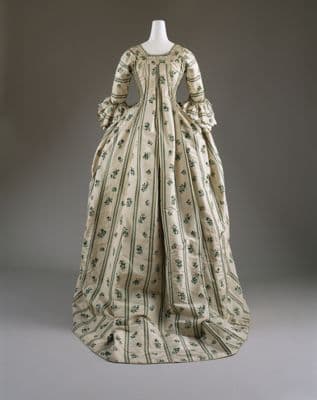
Influences·French court fashionWorn with·stockingsFunction·court-formal
SHARED10 years · cross-culture · cross-category
Echoes Across Time
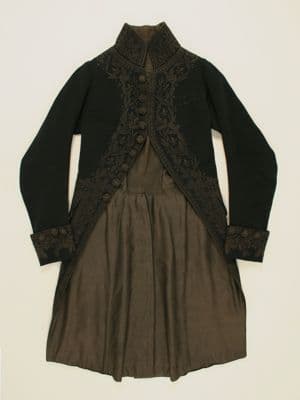
Empire / Regency → Rococo · 60yr58%
SHARED
The rococo waistcoat's serpentine embroidered vines climbing its edges find their echo in the Empire coat's dense floral silk work, but where the earlier garment whispers its decoration along the borders, the later piece shouts it across the entire front panel. Sixty years separate these green silk fantasies, yet both men were dressing for the same essential theater—the performance of status through needle and thread.
Worn with·breechesTechnique·hand-embroideryFunction·court-formal
Pull the Thread→
Follow this garment wherever the graph leads