Victorian Late / Bustle · 1870s · French
Production
ready-to-wear
Material
silk
Culture
French
Influences
French Second Empire fashion · trompe-l'oeil textile design
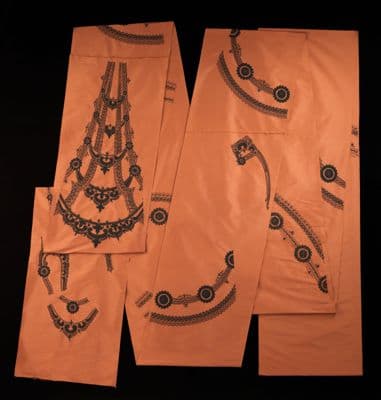
These are pattern pieces for a French habit à la disposition, a formal women's ensemble from the 1870s. The coral-colored silk fabric displays intricate black printed designs including elaborate necklace motifs, decorative chains, bows, and ornamental elements that would create the illusion of jewelry and trim when the garment was constructed. The pieces show the characteristic fitted bodice construction of the bustle era, with curved seaming designed to create a close fit through the torso. The printed decorative elements are strategically placed to enhance the garment's silhouette, with cascading chain designs and bow motifs that would emphasize the fashionable long-waisted line of the period.


These two garments reveal how the Belle Époque's romantic languor grew directly from the Victorian obsession with ornamental excess. The coral silk pattern pieces map out a bustle dress heavy with black passementerie—those cascading loops and medallions that would have created a rattling symphony of jet beads and silk cord with every step.

Follow this garment wherever the graph leads
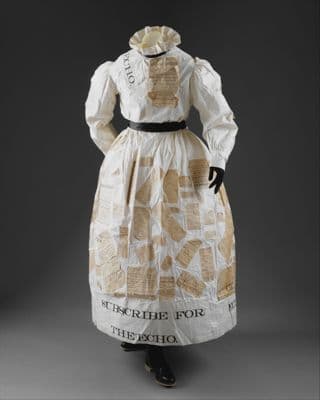
The suffragette's white cotton dress carries its politics literally on its sleeve, with "VOTES FOR WOMEN" block-printed across the fabric in bold letters that turn protest into pattern. A decade earlier, those coral silk pattern pieces reveal the same block-printing technique in service of pure decoration—delicate jewelry motifs and ornamental chains printed onto what would become an elegant French gown.
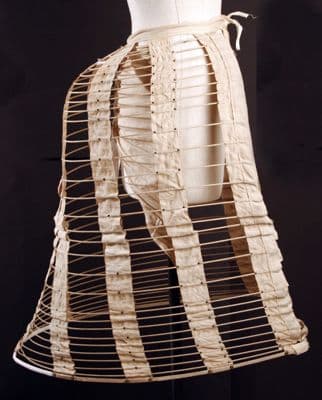
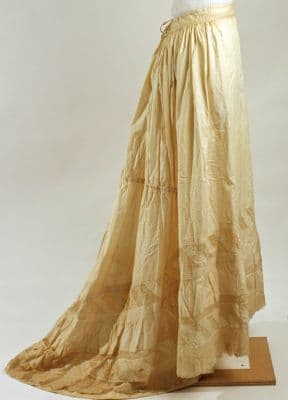
These coral silk pattern pieces map the ornate surface choreography of a French bustle gown—all those printed necklace motifs and decorative chains that would have cascaded down the elaborate drapery—while the cream cotton petticoat beneath reveals the structural engineering that made such theatrical silhouettes possible.
These pieces reveal the hidden architecture of Victorian silhouette-making: the coral silk shows where all that elaborate draping and gathering would fall over the body, while the cage bustle exposes the engineering marvel that made it possible.
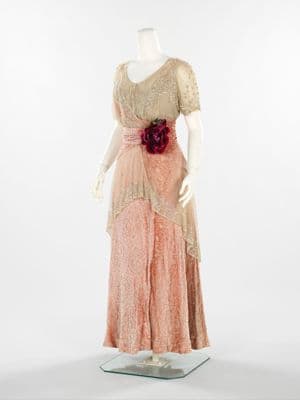
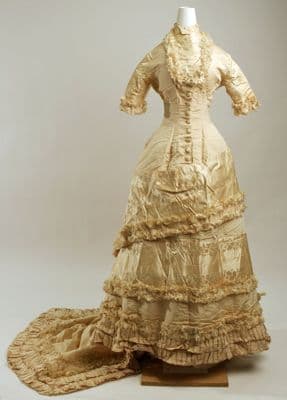
These two pieces reveal the Victorian obsession with surface decoration taken to opposite extremes. The cream wedding gown drowns in its own abundance—cascading ruffles, gathered swags, and frothy trim that pile up like meringue, creating texture through sheer volume. The coral habit's pattern pieces, by contrast, show how French dressmakers achieved similar richness through strategic placement of dark braided trim that maps the body's curves with surgical precision.

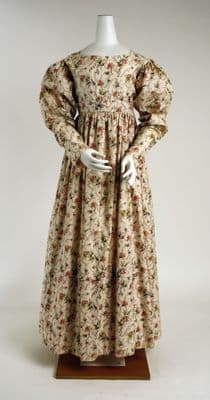
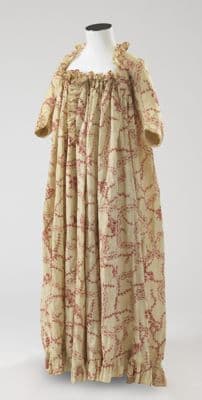
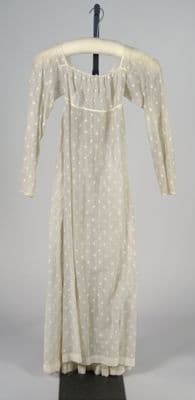
The delicate sprigs scattered across the 1830s morning dress and the bold geometric trim motifs on these 1880s habit pattern pieces reveal how block-printing evolved from whispered florals to architectural statements. Where the earlier dress lets tiny flowers dance freely across cream cotton in that gentle Romantic way, the coral silk pieces map out precise borders and medallions—block-printing now serving Victorian formality rather than pastoral charm.