THE MET
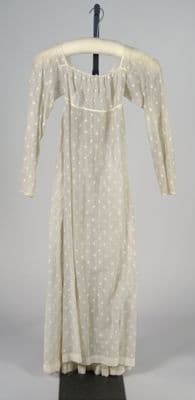
Cream Cotton Muslin Empire Waist Day Dress
Empire / Regency · 1800s-1810s · American
Production
handmade
Material
cotton muslin
Culture
American
Influences
neoclassical Greek chiton · French Empire court dress
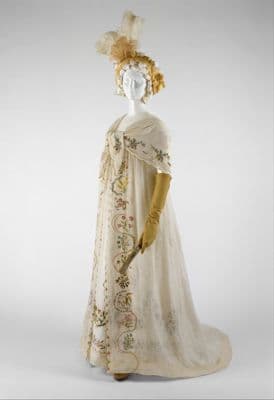
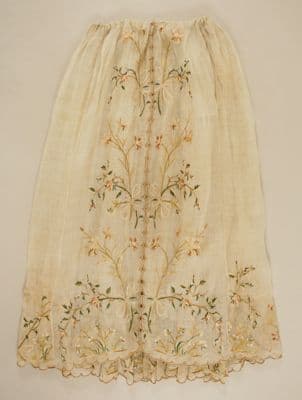
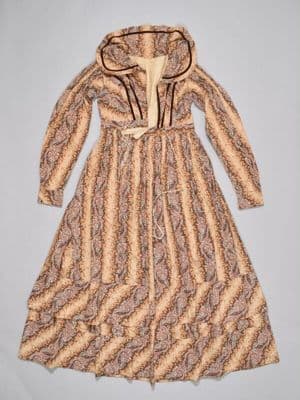
This cotton muslin dress exemplifies Empire period construction with its characteristic high waistline positioned just below the bust and long, straight skirt that falls to the ankles. The bodice features a square neckline with gathered fabric creating soft volume across the chest. Long fitted sleeves extend to the wrists with slight gathering at the shoulders. The lightweight muslin fabric drapes naturally from the raised waistline, creating the columnar silhouette favored during the Regency era. Small scattered motifs appear to be printed or woven into the cream-colored fabric. The dress opens at the back, typical of period construction, and represents the neoclassical aesthetic that dominated early 19th-century women's fashion.
dressa-linesquare necklinefloor length
Connected To
Influences·French Empire court dressWorn with·chemise
SHAREDsame era · cross-culture
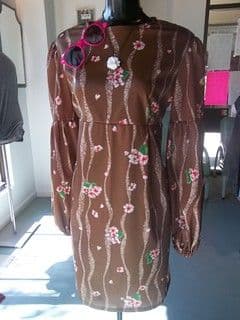
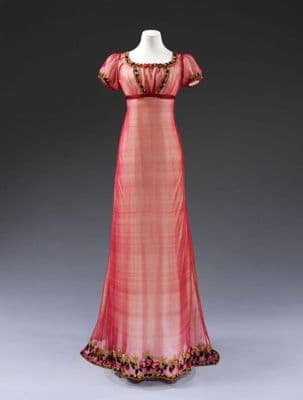
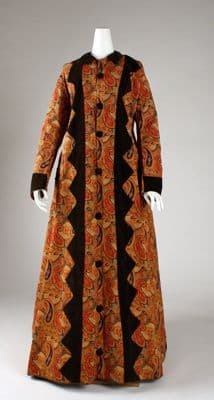
These two gowns reveal how the Empire silhouette crossed class lines and continents with startling uniformity—both drop from that telltale high waistline just below the bust, creating the columnar neo-classical line that Napoleon's court exported across the Western world.
Pull the Thread→
Follow this garment wherever the graph leads