V&A
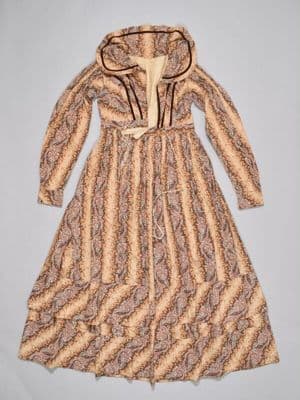
Peach Printed Cotton Day Dress with Hood
Romantic · 1830s · English
Production
handmade
Material
printed cotton
Culture
English
Influences
Empire waistline · cottage dress tradition
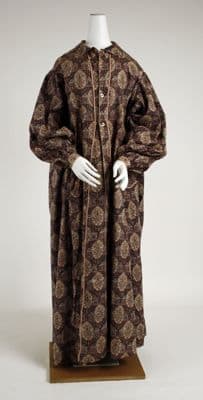
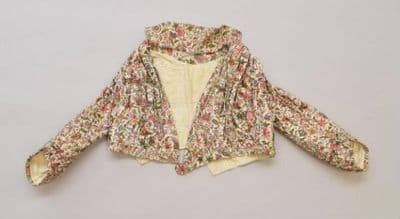
This cotton day dress features a distinctive attached hood and long sleeves with fitted cuffs. The bodice has a high Empire waistline with a drawstring tie at the neckline, creating gentle gathering across the chest. The skirt falls in soft, natural folds from the raised waist to approximately ankle length. The fabric displays an all-over paisley print in brown tones on a peachy-cream ground, typical of English cotton printing of the 1830s. The hood construction appears to be cut as an extension of the bodice, creating a practical garment suitable for outdoor activities or informal domestic wear during the Romantic period.
dressfit and flarev-neckfloor length
Connected To
Influences·Empire waistlineWorn with·chemise
SHARED10 years · cross-culture
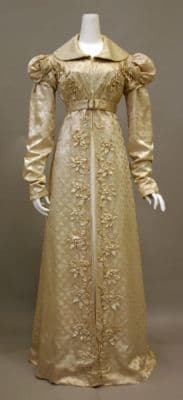
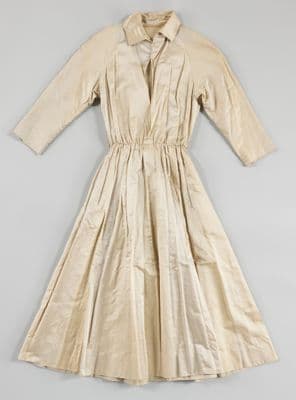
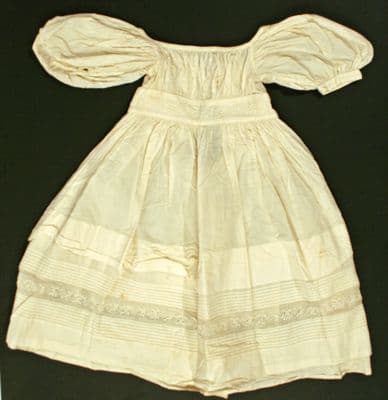
These two dresses capture the Romantic era's obsession with the Empire waistline, but reveal how the same silhouette could serve radically different purposes. The cream muslin child's dress, with its puffed sleeves and delicate pin-tucked bodice, embodies the period's cult of innocence—that studied simplicity that made wealthy children look like cherubs in a Greuze painting.
Echoes Across Time
Victorian Late / Bustle → Romantic · 40yr56%
SHARED
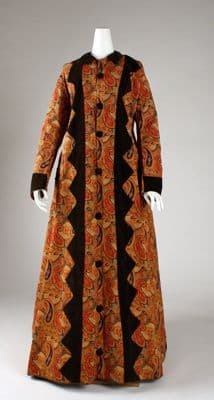
These two garments reveal how paisley's exotic appeal transcended class boundaries in the 19th century, from the English cottage to the American drawing room. The earlier hooded day dress uses a delicate, scattered paisley print that feels almost folksy in its simplicity, while the later dressing gown commands attention with bold, architectural paisley stripes in deep rust—the difference between whispered orientalism and full-throated exoticism.
Worn with·chemiseTechnique·block-printingMotif·paisley
Pull the Thread→
Follow this garment wherever the graph leads