THE MET
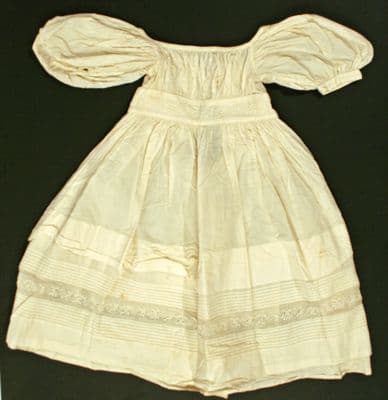
Cream Cotton Muslin Empire Waist Child's Dress
Romantic · 1820s · American
Production
handmade
Material
cotton muslin
Culture
American
Influences
Empire waistline · adult women's Romantic silhouette
A child's cotton dress featuring the characteristic high Empire waistline of the Romantic period, positioned just below the bust with a narrow fitted bodice. The short puffed sleeves are gathered at the shoulder and cuffed at the wrist, typical of 1820s children's fashion. The skirt falls in soft gathered folds from the high waist, creating a columnar silhouette. Horizontal bands of fine tucking or pin-tucking decorate the lower portion of the skirt, with what appears to be delicate whitework embroidery or drawn thread work creating geometric patterns. The neckline is wide and off-shoulder, gathered with drawstring or elastic. The lightweight cotton muslin fabric shows the period's preference for washable, practical materials for children's garments while maintaining fashionable proportions.
dressa-lineoff-the-shoulderbelow the knee
Connected To
Influences·Empire waistlineWorn with·chemise
SHARED10 years · cross-culture
These two dresses capture the Romantic era's obsession with the Empire waistline, but reveal how the same silhouette could serve radically different purposes. The cream muslin child's dress, with its puffed sleeves and delicate pin-tucked bodice, embodies the period's cult of innocence—that studied simplicity that made wealthy children look like cherubs in a Greuze painting.
Echoes Across Time
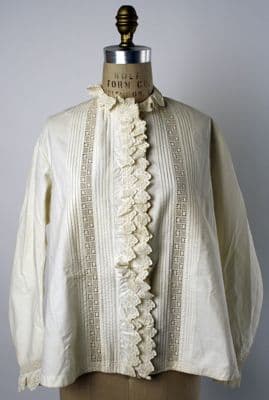
Victorian Late / Bustle → Romantic · 50yr62%
SHARED
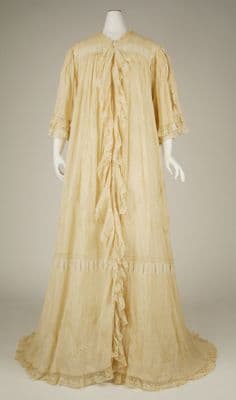
Both garments speak the same language of domestic luxury through cotton's quiet virtuosity — the Victorian bed jacket's geometric drawn-work bands and the Empire child's dress's delicate horizontal tucks create parallel grammars of hand-worked refinement. Separated by fifty years, they reveal how cotton lawn and muslin became canvases for displaying a family's leisure time: the hours spent pulling threads and setting tiny stitches that only intimates would ever see.
Worn with·chemiseWorn with·drawersTechnique·hand-embroidery
Pull the Thread→
Follow this garment wherever the graph leads