THE MET
Tan Cotton Knee-High Stockings with Black Toe
Fin de Siecle / Gibson Girl · 1880s · French
Production
mass-produced
Material
cotton
Culture
French
A pair of tan cotton stockings with black decorative elements at the toe area. The stockings appear to be machine-knitted with a fine gauge, creating a smooth, close-fitting surface. The construction shows typical late 19th-century hosiery techniques with shaped leg portions and reinforced toe sections. The black detailing at the toe appears to be either embroidered or woven into the fabric, possibly featuring a small floral or geometric motif. The stockings would have extended to just below the knee when worn, typical of women's hosiery of the 1880s period when they were secured with garters above or below the knee.
tights/stockingstight fitknee length
Connected To
59%
Worn with·chemiseWorn with·garters
SHARED100 years · cross-culture · cross-category
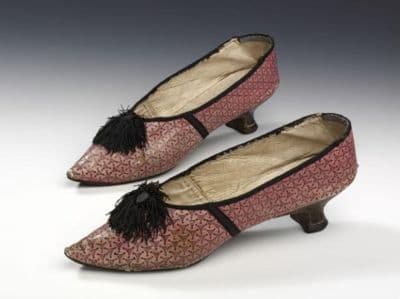
These two accessories reveal how the same decorative impulse—contrasting dark accents against a lighter ground—can serve wildly different social codes a century apart. The 18th-century shoes deploy their geometric black triangular pattern as a kind of architectural ornament, turning the foot into a miniature monument to Neoclassical taste, while the Victorian stocking's simple black toe and heel offer the most discreet possible nod to contrast, barely visible beneath layers of propriety.
Text61%
Image49%
Entity27%
Worn with·chemiseWorn with·drawers
SHARED60 years · cross-culture · cross-category
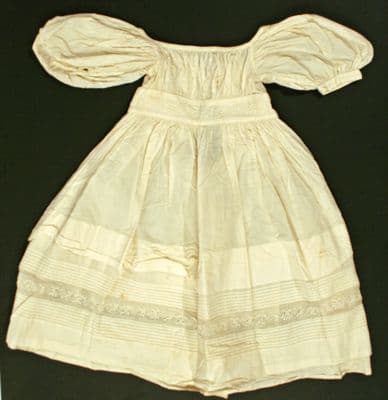
These pieces speak the same language of cotton's democratic promise, though separated by decades and an ocean. The French stocking's practical tan weave and reinforced black toe reveal the same utilitarian honesty as the American child's dress, where simple cotton muslin is elevated only by subtle tucks and the faintest lace trim at the hem.
Worn with·chemiseWorn with·drawers
SHARED40 years · cross-culture · cross-category
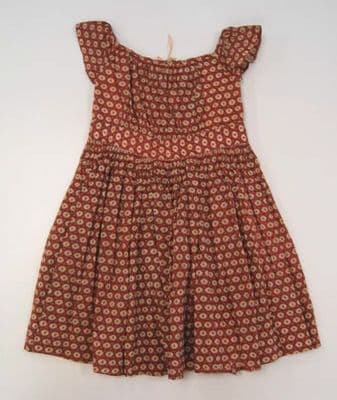
These two pieces reveal how Victorian children's wardrobes operated as miniature versions of adult propriety, even down to the hidden layers. The rust-red dress with its tiny scattered polka dots and demure flutter sleeves would have been worn over multiple undergarments, including long stockings like this tan cotton pair with its practical black-reinforced toe.
Worn with·chemiseWorn with·drawers
SHARED25 years · cross-culture · cross-category
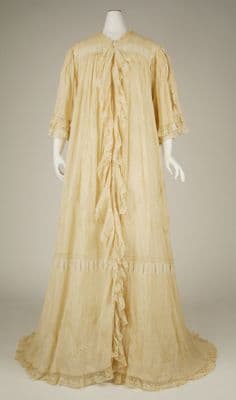
This Edwardian negligée and those fin de siècle stockings both speak the language of intimate luxury disguised as practicality—the robe's pale silk-cotton blend catching light like expensive lingerie while maintaining the modesty of a house dress, while the stockings elevate a utilitarian garment through their fine cotton weave and that cheeky contrast toe.
Pull the Thread→
Follow this garment wherever the graph leads