THE MET
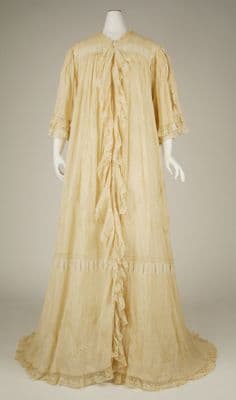
Pale Yellow Silk Cotton Negligée Robe
Edwardian · 1900s-1910s · American or European
Production
handmade
Material
silk and cotton blend
Culture
American or European
A floor-length negligée featuring a loose, flowing silhouette with three-quarter length sleeves that gather at the cuffs. The garment opens down the front with a series of small buttons or ties concealed beneath decorative trim. The pale yellow silk and cotton fabric creates soft vertical folds that fall from the high neckline to the floor in an unstructured drape. Delicate lace or embroidered trim edges the front opening, cuffs, and hemline, adding feminine detail typical of Edwardian intimate wear. The high round neckline and modest coverage reflect the era's approach to private garments that maintained propriety even in personal settings.
dressloose fitround neckfloor length
Connected To
Worn with·chemiseWorn with·drawers
SHARED85 years · cross-culture
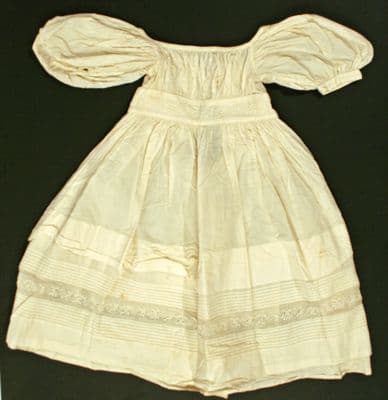
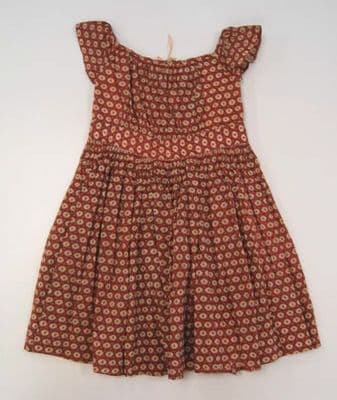
These two garments share the Romantic era's obsession with classical drapery and the empire waist's power to transform the female form into something ethereal. The child's dress, with its high-set waistband and puffed sleeves, establishes the template that the Edwardian negligée later luxuriates in—both use that gathered fullness below the bust to create an otherworldly silhouette that seems to float rather than walk.
Text68%
Image79%
Entity25%
Worn with·chemiseWorn with·drawers
SHARED65 years · cross-culture
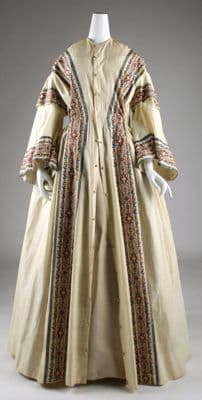
These two garments reveal how the same gentle gathering technique could serve radically different purposes across generations. The Edwardian negligée's soft pleats cascade from a high neckline in butter-colored silk, creating an intimate cocoon of domesticity, while the child's rust-red cotton dress employs nearly identical gathering at the bodice to achieve that coveted Victorian silhouette of demure femininity.
Worn with·chemiseWorn with·drawers
SHARED65 years · cross-culture · cross-category
These robes speak the same language of domestic luxury across sixty-five years, both wrapping their wearers in yards of pale fabric that pools into ceremonial trains. The earlier Victorian gown announces itself with bold burgundy and gold trim that marches down the front and sleeves like military braid, while the Edwardian negligée whispers its opulence through delicate lace insertions and ruffled cascades.
57%
Worn with·chemiseWorn with·drawers
SHARED45 years · cross-culture
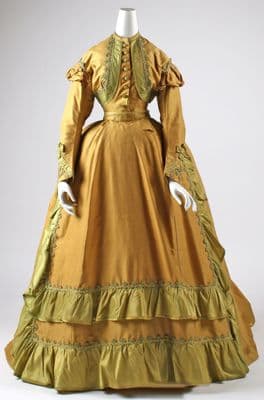
These two golden confections share the Victorian obsession with surface embellishment, though they inhabit opposite ends of the domestic sphere.
Pull the Thread→
Follow this garment wherever the graph leads