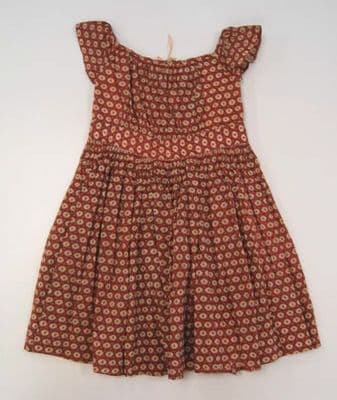
Victorian Early / Crinoline · 1840s · American
Production
handmade
Material
cotton
Culture
American
Influences
adult Victorian dress proportions
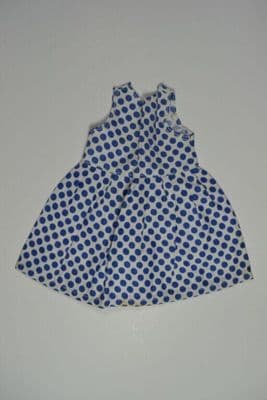
A child's cotton dress featuring a fitted bodice with short cap sleeves and a full gathered skirt that falls to mid-calf length. The rust-colored fabric displays an all-over pattern of small cream and white circular dots or rings. The bodice appears to have a round neckline and is constructed with a natural waistline that transitions into the gathered skirt. The cap sleeves are cut as extensions of the bodice rather than set-in sleeves. The cotton fabric appears to be a lightweight plain weave, suitable for children's everyday wear. The construction shows typical 1840s proportions with the fitted upper body and full skirt silhouette that would become characteristic of mid-19th century children's fashion, reflecting adult styles in miniature.
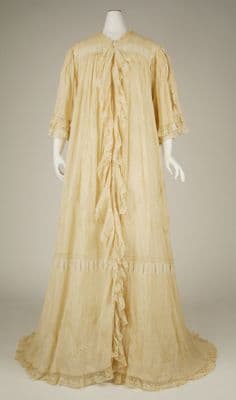
These two garments reveal how the same gentle gathering technique could serve radically different purposes across generations. The Edwardian negligée's soft pleats cascade from a high neckline in butter-colored silk, creating an intimate cocoon of domesticity, while the child's rust-red cotton dress employs nearly identical gathering at the bodice to achieve that coveted Victorian silhouette of demure femininity.

These two garments reveal how the same gentle gathering technique could serve radically different purposes across generations. The Edwardian negligée's soft pleats cascade from a high neckline in butter-colored silk, creating an intimate cocoon of domesticity, while the child's rust-red cotton dress employs nearly identical gathering at the bodice to achieve that coveted Victorian silhouette of demure femininity.


Follow this garment wherever the graph leads
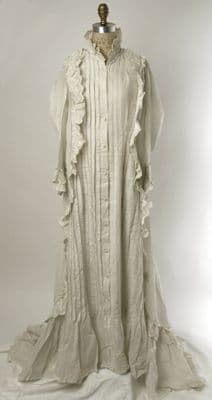
These two garments reveal how Victorian cotton construction bridged the nursery and the boudoir through identical techniques of gathering and ruffling. The child's rust calico dress uses the same knife-pleated ruffle application and gathered waistline seaming as the ivory negligée, but where the nightgown's ruffles cascade dramatically from neck to hem like a waterfall of cotton lawn, the little dress keeps its frills contained to shoulders and skirt—propriety scaled down for small hands.
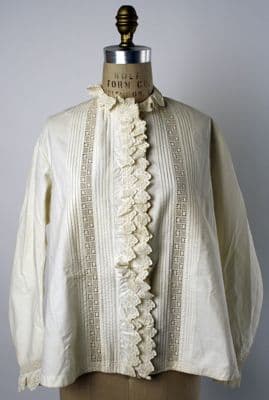
The tiny polka dots scattered across that rust-red child's dress and the delicate eyelet embroidery marching down the bed jacket's front placket both speak the same Victorian language of restrained ornamentation—pattern achieved through repetition rather than bold gesture.
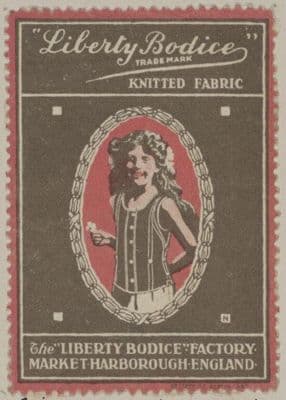
That rust-red cotton dress with its tiny white dots and fitted bodice speaks the same language as the Liberty Bodice's promise of freedom from Victorian constraint, but they're on opposite sides of the revolution. The dress, with its careful smocking and full skirt, represents the last gasp of childhood as miniature adulthood—requiring a chemise and drawers beneath, layers upon layers of propriety.