V&A
Burgundy Knitted Wool Liberty Bodice Undergarment
World War I Transition · 1910s · British
Designer
Liberty Bodice Factory
Production
mass-produced
Material
knitted wool
Culture
British
Movement
Dress Reform Movement
Influences
corset reform movement · wartime practicality
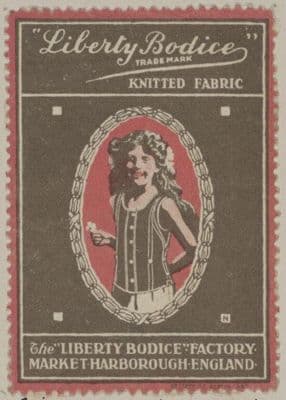
This advertising stamp depicts a Liberty Bodice, a revolutionary knitted undergarment that replaced traditional corsets for children and active women during World War I. The figure wears a sleeveless, close-fitting ribbed knit bodice that extends to the waist, featuring button closures down the front. The garment appears to be made of fine-gauge knitted wool in a natural cream color, designed to provide support without the restriction of whalebone stays. The bodice represents a significant shift toward practical, hygienic underwear that allowed greater freedom of movement. The oval frame and decorative border emphasize the garment's commercial importance as a modern alternative to Victorian-era foundation wear, marketed specifically for its comfort and washability.
top/t-shirt/sweatshirttight fitround neckhip length
Connected To
Movement·Dress Reform MovementWorn with·chemiseWorn with·drawers
Echoes Across Time
Victorian Late / Bustle → World War I Transition · 50yr72%
SHARED
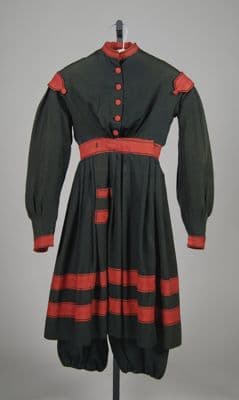
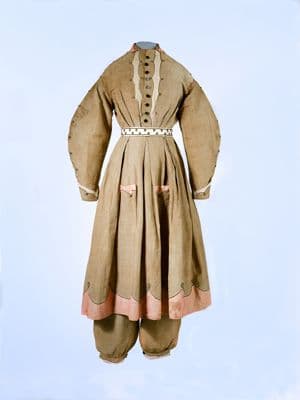
These two garments trace the arc of the dress reform movement from aspiration to revolution. The Victorian gymnasium suit, with its bloomer trousers tucked beneath a modest dress and cinched with that telling white belt, represents the movement's early compromise—offering women physical freedom while maintaining respectability through familiar silhouettes.
Movement·Dress Reform MovementWorn with·chemiseWorn with·drawers
Pull the Thread→
Follow this garment wherever the graph leads