THE MET
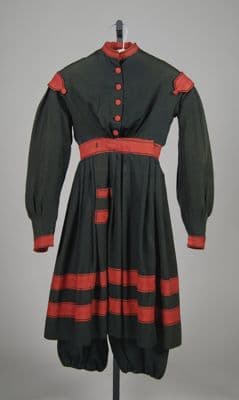
Forest Green Wool Gymnasium Suit with Red Trim
Victorian Late / Bustle · 1880s-1890s · American
Production
ready-to-wear
Material
wool
Culture
American
Movement
Dress Reform Movement
Influences
Turkish trouser influence · military uniform styling
A two-piece gymnasium costume featuring a fitted bodice with high neckline, long sleeves, and button-front closure in dark green wool. Red trim outlines the collar, cuffs, button placket, and waistband. The bodice blouses slightly over a high waistband that sits just below the natural waist. Attached or coordinating bloomers gather at the ankles with matching red bands. The garment represents the Victorian era's attempt to create modest yet functional athletic wear for women, allowing greater freedom of movement than traditional dress while maintaining coverage deemed appropriate for the period.
dressfit and flarehigh neckbelow the knee
Connected To
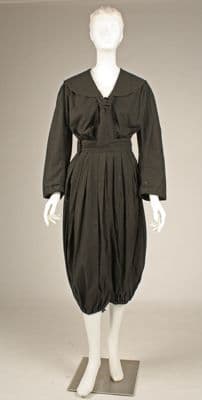
73%
Influences·Turkish trouser influenceFunction·sportswear
LINEAGE25 years · cross-category→ directed
Echoes Across Time
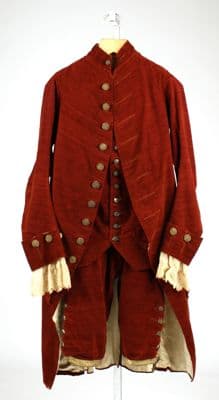
Victorian Late / Bustle → Neoclassical Transition · 110yr60%
SHARED
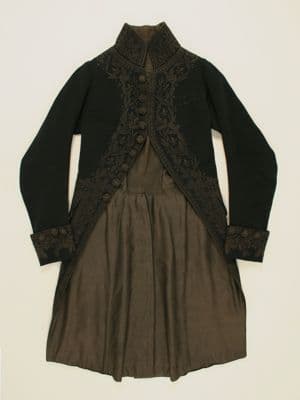
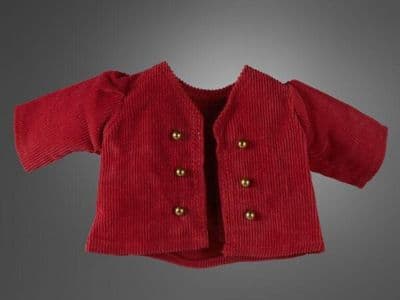
These garments are separated by over a century but united by their crisp military borrowings—both deploy the language of regimental dress through precise rows of brass buttons marching down fitted bodices and the authoritative contrast of deep jewel tones against bright trim.
Influences·military uniform styling

Victorian Late / Bustle → 1980s · 140yr60%
SHARED
Pull the Thread→
Follow this garment wherever the graph leads