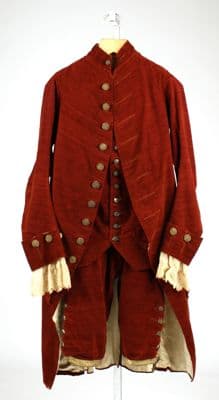
Neoclassical Transition · 1770s · British
Production
handmade
Material
cotton velvet
Culture
British
Influences
French court dress · military uniform styling
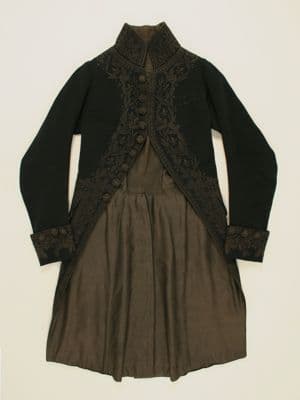
This burgundy cotton velvet suit exemplifies late 18th-century masculine formal dress with its characteristic three-piece construction. The coat features a fitted bodice that flares into full skirts reaching mid-thigh, with a high standing collar and double-breasted front closure secured by gilt buttons. The sleeves are close-fitting with turned-back cuffs trimmed in cream silk, creating contrast at the wrists. The matching waistcoat beneath is cut shorter, ending at the natural waist, while the breeches are fitted through the thigh and fasten below the knee. The rich burgundy velvet and precise tailoring reflect the period's emphasis on refined craftsmanship and luxurious materials in gentlemen's attire.
These two formal coats trace the evolution of military swagger into civilian dress across the Napoleonic divide. The earlier burgundy velvet suit channels 18th-century British restraint—its double-breasted front and brass buttons speak the language of naval authority, while the cream silk stockings and knee breeches maintain aristocratic propriety.
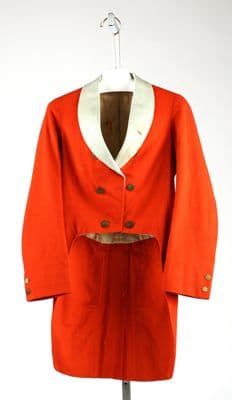

These two formal coats trace the evolution of military swagger into civilian dress across the Napoleonic divide. The earlier burgundy velvet suit channels 18th-century British restraint—its double-breasted front and brass buttons speak the language of naval authority, while the cream silk stockings and knee breeches maintain aristocratic propriety.


Follow this garment wherever the graph leads
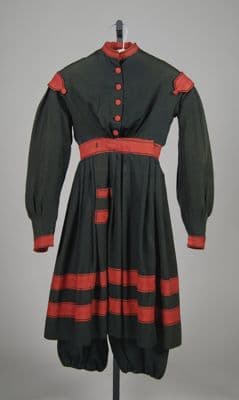
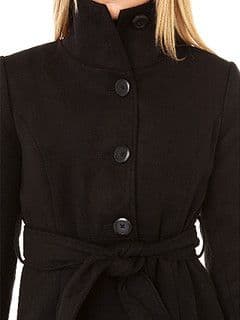
These two coats speak the same military language across a century of menswear evolution. The 18th-century velvet suit deploys its brass buttons in tight formation up the front and sleeves like a general's dress uniform, while the Victorian hunting coat translates that regimental authority into sporting context with its own brass button march and stand collar.
These garments are separated by over a century but united by their crisp military borrowings—both deploy the language of regimental dress through precise rows of brass buttons marching down fitted bodices and the authoritative contrast of deep jewel tones against bright trim.
These two garments reveal how military dress codes have repeatedly infiltrated civilian wardrobes across centuries. The 18th-century burgundy suit borrows its regimental bearing from officer's uniforms — that ramrod-straight posture created by the high collar, the martial precision of its brass button march down the front, and the formal authority of its structured silhouette.
These two coats speak the same military language across a century of menswear evolution. The 18th-century velvet suit deploys its brass buttons in tight formation up the front and sleeves like a general's dress uniform, while the Victorian hunting coat translates that regimental authority into sporting context with its own brass button march and stand collar.