Victorian Late / Bustle · 1880s · American
Production
handmade
Material
wool melton
Culture
American
Influences
English hunting tradition · military uniform styling
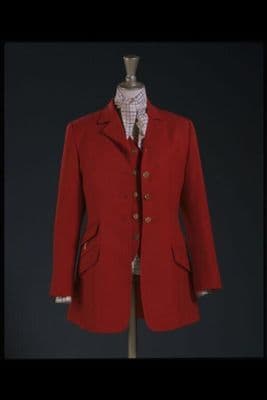
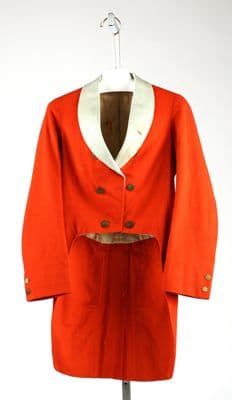
A scarlet red wool hunting coat featuring the traditional cutaway front silhouette characteristic of formal riding attire. The coat displays a cream-colored collar and lapel facing, with dark brown velvet trim visible at the collar edge. The garment shows precise tailoring with a fitted waist and flared skirt typical of Victorian equestrian wear. Multiple buttons are visible down the front closure, and the sleeves appear to have functional button details at the cuffs. The cutaway front design allows for proper positioning in the saddle while maintaining the formal appearance required for traditional fox hunting. The heavy wool construction would provide warmth and durability during outdoor sporting activities.
These two red riding coats reveal how equestrian formality has shed its Victorian theatricality while keeping its essential DNA intact. The 1880s hunting coat, with its exaggerated cutaway front and cream-colored vest insert, performs aristocratic leisure like a costume—all pomp and ceremony for the hunting field's social theater.


These two red riding coats reveal how equestrian formality has shed its Victorian theatricality while keeping its essential DNA intact. The 1880s hunting coat, with its exaggerated cutaway front and cream-colored vest insert, performs aristocratic leisure like a costume—all pomp and ceremony for the hunting field's social theater.

Follow this garment wherever the graph leads
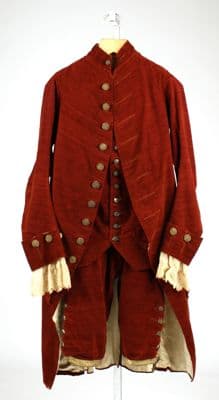
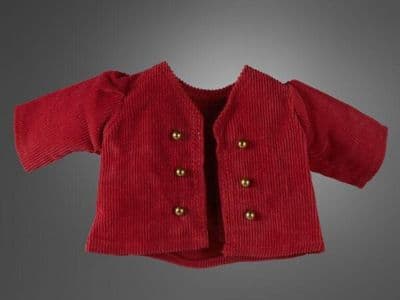
These two coats speak the same military language across a century of menswear evolution. The 18th-century velvet suit deploys its brass buttons in tight formation up the front and sleeves like a general's dress uniform, while the Victorian hunting coat translates that regimental authority into sporting context with its own brass button march and stand collar.
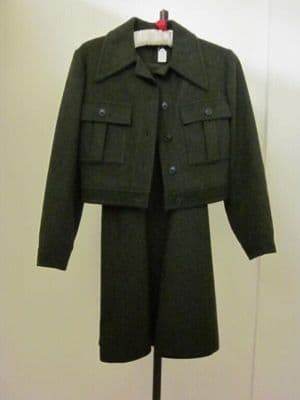
That black military coat with its razor-sharp lapels and gleaming buttons carries the same authoritative swagger as the scarlet hunting coat's formal tailcoat silhouette, both borrowing the language of masculine power dressing to armor their wearers. The Victorian coat's cream shawl collar and brass fastenings speak to gentlemen's sporting rituals, while the contemporary piece translates that same regimental precision into urban armor—double-breasted discipline for different battlefields.
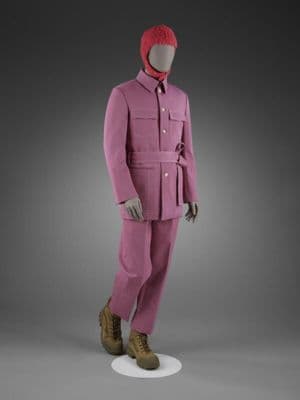
The Victorian hunting coat's brass buttons and structured military bearing find an unlikely descendant in this millennial pink Zhongshan suit, both garments borrowing the crisp authority of military dress for civilian purposes. Where the hunting coat uses its scarlet wool and white collar to signal English aristocratic leisure, the contemporary suit transforms Mao's revolutionary uniform into something almost playful—that soft pink turning political austerity into a kind of gentle rebellion.

These two coats speak the same military language across a century of menswear evolution. The 18th-century velvet suit deploys its brass buttons in tight formation up the front and sleeves like a general's dress uniform, while the Victorian hunting coat translates that regimental authority into sporting context with its own brass button march and stand collar.