V&A
Pink Merino Wool Zhongshan Suit
2020s · 2010s · Chinese
Designer
Yushan Li and Jun Zhou, PRONOUNCE
Production
ready-to-wear
Material
merino wool
Culture
Chinese
Movement
Gender-fluid fashion · Cottagecore
Influences
Mao suit tradition · military uniform styling
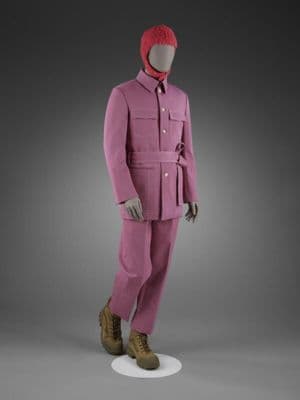
A contemporary interpretation of the traditional Chinese Zhongshan suit rendered in dusty pink merino wool. The jacket features the characteristic mandarin collar, symmetrical chest pockets with flaps, and a belted waist that creates a defined silhouette. The construction maintains the suit's military-inspired origins with clean lines and structured tailoring. Four front buttons secure the jacket, while the matching trousers appear straight-legged with a modern fit. The unconventional pink colorway transforms this historically masculine and politically significant garment into a bold fashion statement that bridges traditional Chinese menswear with contemporary gender-fluid fashion sensibilities.
jumpsuitregular fithigh neckfloor length
Connected To
Influences·military uniform styling
SHARED130 years · cross-culture · cross-category
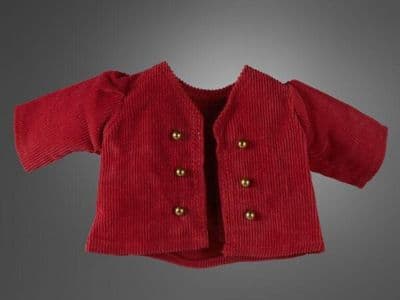
The Victorian hunting coat's brass buttons and structured military bearing find an unlikely descendant in this millennial pink Zhongshan suit, both garments borrowing the crisp authority of military dress for civilian purposes. Where the hunting coat uses its scarlet wool and white collar to signal English aristocratic leisure, the contemporary suit transforms Mao's revolutionary uniform into something almost playful—that soft pink turning political austerity into a kind of gentle rebellion.
Echoes Across Time
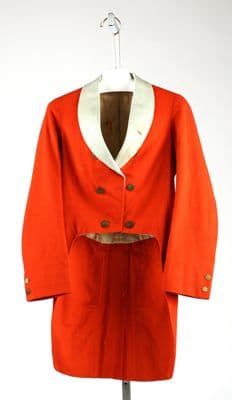
Victorian Late / Bustle → 2020s · 130yr62%
SHARED
The Victorian hunting coat's brass buttons and structured military bearing find an unlikely descendant in this millennial pink Zhongshan suit, both garments borrowing the crisp authority of military dress for civilian purposes. Where the hunting coat uses its scarlet wool and white collar to signal English aristocratic leisure, the contemporary suit transforms Mao's revolutionary uniform into something almost playful—that soft pink turning political austerity into a kind of gentle rebellion.
Influences·military uniform styling
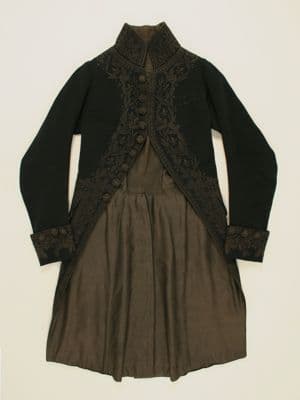
Empire / Regency → 2020s
Pull the Thread→
Follow this garment wherever the graph leads