SMITHSONIAN
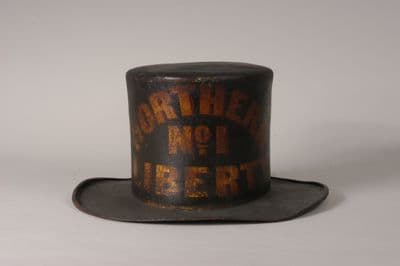
Black Felt Firefighter Parade Hat with Red Lettering
Victorian Early / Crinoline · 1860s · American
Production
handmade
Material
pressed felt
Culture
American
Influences
top hat silhouette · military uniform styling
A tall cylindrical black felt hat with a wide flat brim, featuring painted orange-red lettering that reads 'NORTHERN' and 'LIBERTY' with 'FIRE' below. The hat displays the characteristic stovepipe silhouette of mid-19th century American volunteer fire company ceremonial headwear. The pressed felt construction creates a rigid structure that maintains the hat's dramatic height and geometric form. The painted lettering identifies the specific fire company, a common practice for volunteer firefighting organizations of the era. The wide brim provides practical protection while the imposing height served ceremonial and identificatory purposes during parades and formal firefighting events.
hat
Connected To
61%
Influences·military uniform styling
SHARED110 years · cross-culture · cross-category
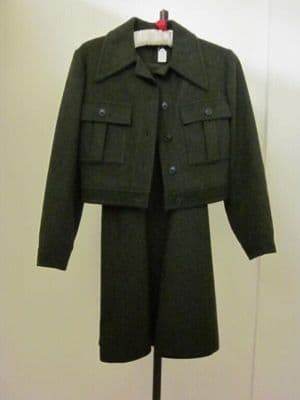
The olive wool suit's sharp military tailoring—those chest pockets, the brass buttons, the cropped jacket that could have walked off a wartime parade ground—speaks the same authoritarian language as the firefighter's ceremonial hat with its bold block lettering and official bearing.
Text42%
Image58%
Entity30%
Influences·military uniform styling
SHARED150 years · cross-culture · cross-category
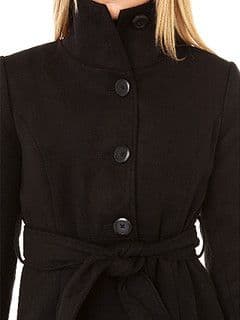
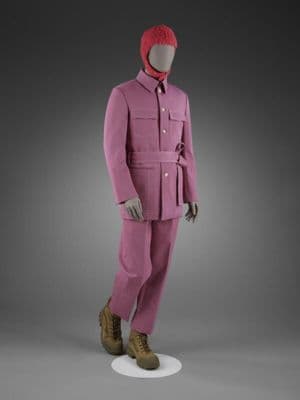
The pink Zhongshan suit and the Victorian firefighter's parade hat both carry the DNA of institutional authority, but one whispers where the other shouts. The suit's clean military lines—those sharp chest pockets, the stand collar, the belt that cinches purpose into place—echo the same impulse toward uniformed dignity that made 19th-century firefighters don their ceremonial top hats with bold lettering.

Influences·military uniform styling
SHARED160 years · cross-culture · cross-category
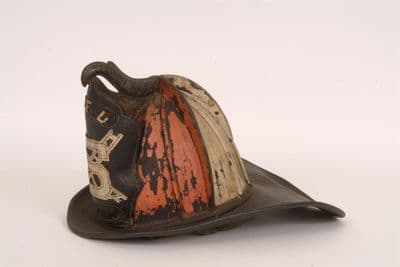
Both pieces weaponize black wool's authority, but across a century-wide gulf that separates actual service from borrowed swagger. The Victorian firefighter's parade hat, with its weathered "DRINK NOT BEER" temperance slogan blazoned in fading red letters, represents the earnest civic duty of men who wore their uniforms as moral armor.
Text
61%
Influences·military uniform styling
SHARED50 years · cross-culture · cross-category
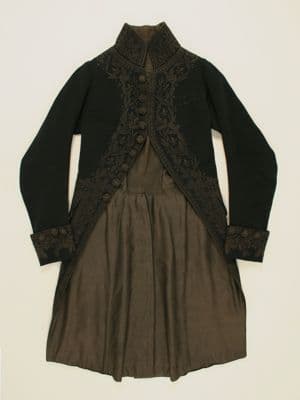
The elaborate silk embroidery cascading down this Napoleonic officer's coat and the bold red lettering declaring "DRINK HOT BEER" on this fireman's parade hat both spring from the same impulse: using decoration to broadcast authority and belonging.
Text
Echoes Across Time
Wartime / Utility Fashion → Victorian Early / Crinoline · 110yr61%
SHARED
The olive wool suit's sharp military tailoring—those chest pockets, the brass buttons, the cropped jacket that could have walked off a wartime parade ground—speaks the same authoritarian language as the firefighter's ceremonial hat with its bold block lettering and official bearing.
Influences·military uniform styling
2020s → Victorian Early / Crinoline · 150yr61%
Pull the Thread→
Follow this garment wherever the graph leads