THE MET
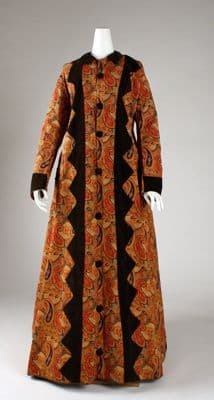
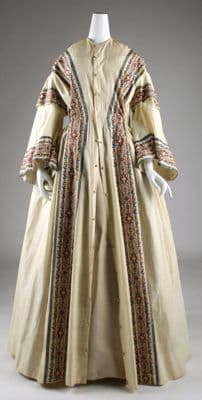
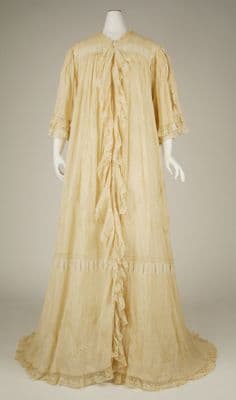
Cream Cotton Dressing Gown with Burgundy Gold Trim
Victorian Early / Crinoline · 1840s · American
Production
handmade
Material
cotton
Culture
American
Influences
Turkish robe styling · Oriental wrapper tradition
This mid-19th century dressing gown features a loose, flowing silhouette that falls in graceful folds to the floor. The cream-colored cotton base is decorated with elaborate woven or printed borders in burgundy, gold, and brown tones that run vertically down the front opening and around the wide sleeves. The garment opens completely down the front and has very wide, kimono-style sleeves that extend well beyond the hands. The decorative borders show intricate geometric and possibly floral patterns typical of mid-Victorian textile design. This type of wrapper was worn over undergarments for privacy and warmth during morning routines in the domestic sphere, representing the era's emphasis on modesty and the separation of public and private dress.
coatloose fitcollarlessfloor length
Connected To
Influences·Turkish robe styling
SHARED40 years
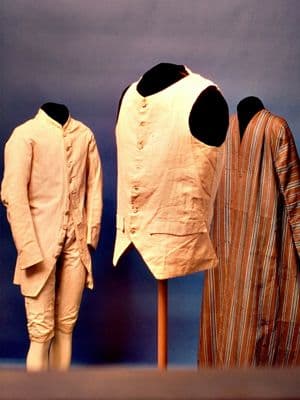
These two American dressing gowns trace the long shadow of Ottoman luxury through domestic life, separated by forty years but united by their borrowed exoticism. The earlier Empire piece keeps its Turkish inspiration subtle—that languid drape and wraparound construction speak to the period's fascination with Eastern ease—while the later Victorian example makes the connection explicit with its ornate trim work that mimics the embroidered borders of actual Turkish robes.
Echoes Across Time
Empire / Regency → Victorian Early / Crinoline · 40yr65%
SHARED
These two American dressing gowns trace the long shadow of Ottoman luxury through domestic life, separated by forty years but united by their borrowed exoticism. The earlier Empire piece keeps its Turkish inspiration subtle—that languid drape and wraparound construction speak to the period's fascination with Eastern ease—while the later Victorian example makes the connection explicit with its ornate trim work that mimics the embroidered borders of actual Turkish robes.
Influences·Turkish robe styling
Edwardian → Victorian Early / Crinoline
Pull the Thread→
Follow this garment wherever the graph leads