SMITHSONIAN
Cream Linen Shawl Collar Dressing Gown
Empire / Regency · 1800s · American
Production
handmade
Material
linen
Culture
American
Influences
Turkish robe styling · banyan tradition
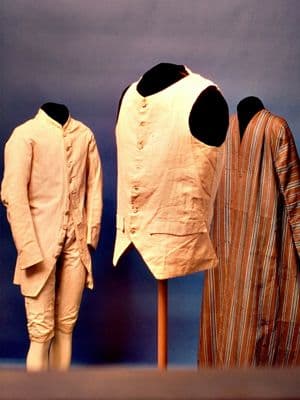
Three men's dressing gowns displayed on mannequins show the evolution of domestic menswear. The center cream-colored linen gown features a shawl collar, wrap-front closure with self-fabric ties, and loose, unstructured silhouette typical of mid-19th century morning dress. The garment extends to mid-thigh length with wide sleeves that taper at the wrists. The peach garment on the left appears to be a matching waistcoat and trousers ensemble, while the brown striped robe on the right demonstrates the period's preference for rich patterns in private wear. These garments reflect the Victorian gentleman's need for comfortable yet respectable attire for morning routines and private entertaining.
coatloose fitknee length
Connected To
Influences·Turkish robe styling
SHARED40 years
These two American dressing gowns trace the long shadow of Ottoman luxury through domestic life, separated by forty years but united by their borrowed exoticism. The earlier Empire piece keeps its Turkish inspiration subtle—that languid drape and wraparound construction speak to the period's fascination with Eastern ease—while the later Victorian example makes the connection explicit with its ornate trim work that mimics the embroidered borders of actual Turkish robes.
LINEAGE60 years · cross-culture · cross-category→ directed
Lineage: “Turkish robe styling”
Text84%
Entity12%
Echoes Across Time
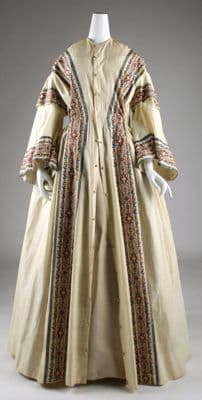
Empire / Regency → Victorian Early / Crinoline · 40yr65%
SHARED
These two American dressing gowns trace the long shadow of Ottoman luxury through domestic life, separated by forty years but united by their borrowed exoticism. The earlier Empire piece keeps its Turkish inspiration subtle—that languid drape and wraparound construction speak to the period's fascination with Eastern ease—while the later Victorian example makes the connection explicit with its ornate trim work that mimics the embroidered borders of actual Turkish robes.
Influences·Turkish robe styling
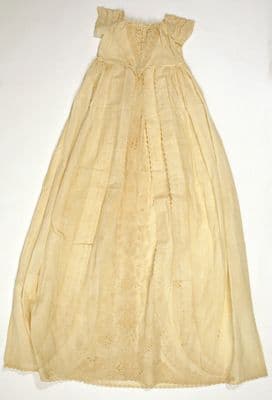
Rococo → Empire / Regency
Pull the Thread→
Follow this garment wherever the graph leads