THE MET
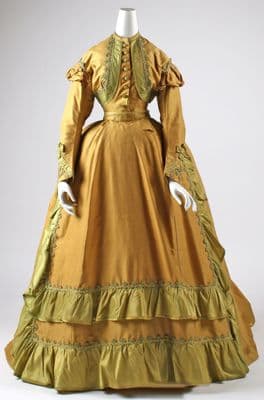
Golden Yellow Silk Taffeta Afternoon Dress with Military Trim
Victorian Early / Crinoline · 1860s · French
Production
ready-to-wear
Material
silk taffeta
Culture
French
Influences
military uniform braiding · Zouave jacket styling
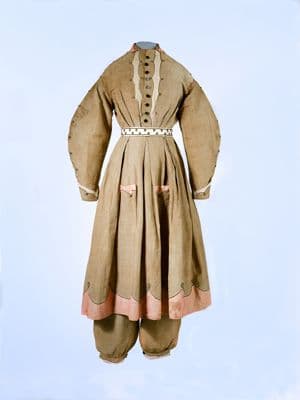
This 1860s afternoon dress features a fitted bodice with a high neckline and long sleeves ending in pointed cuffs. The golden yellow silk taffeta is elaborately trimmed with olive green military-style braiding and decorative buttons running down the center front and adorning the sleeves. The bodice has a natural waistline that extends into a full bell-shaped skirt supported by a crinoline cage. The skirt hem is decorated with multiple tiers of olive green ruffled trim creating horizontal bands of contrasting color. The construction demonstrates the period's fascination with military aesthetics translated into civilian women's wear, with precise geometric braiding patterns that emphasize the structured silhouette typical of mid-Victorian fashion.
dressa-linehigh neckfloor length
Connected To
57%
Worn with·chemiseWorn with·drawers
SHARED20 years · cross-culture · cross-category
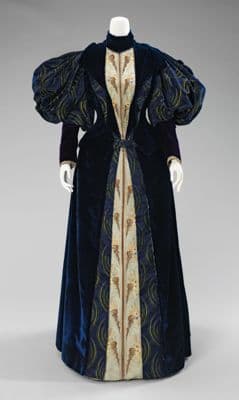
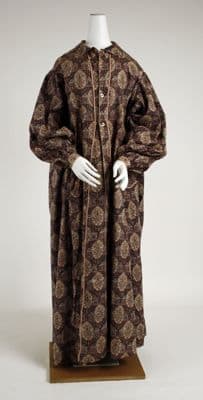
These two garments reveal how Victorian domestic and public spheres borrowed from each other's visual vocabulary across decades. The paisley dressing gown's military-inspired frogging and structured silhouette echo the afternoon dress's elaborate braided trim and fitted bodice, showing how martial details migrated from formal French fashion into American at-home wear.
Pull the Thread→
Follow this garment wherever the graph leads