THE MET
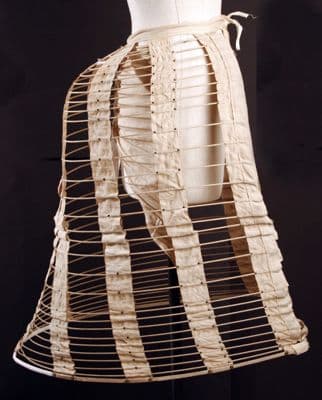
Steel Wire and Cotton Tape Cage Bustle
Victorian Late / Bustle · 1870s · American
Production
mass-produced
Material
cotton tape and steel wire
Culture
American
This cage bustle features a distinctive bell-shaped framework constructed from steel wire hoops connected by vertical cotton tape strips. The structure creates a pronounced projection at the back while maintaining a relatively flat front profile. Multiple horizontal wire rings decrease in circumference from bottom to top, with the largest ring at the hem creating maximum extension. Cotton tape bands run vertically between the hoops, providing stability and attachment points. The bustle fastens at the waist with cotton ties. This lightweight construction replaced the heavier horsehair bustles of the early 1870s, allowing for greater mobility while still achieving the fashionable silhouette that projected the skirt dramatically behind the wearer.
Connected To
Worn with·chemiseWorn with·corsetWorn with·petticoat
SHAREDsame era · cross-culture · cross-category
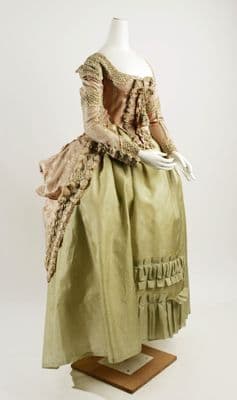
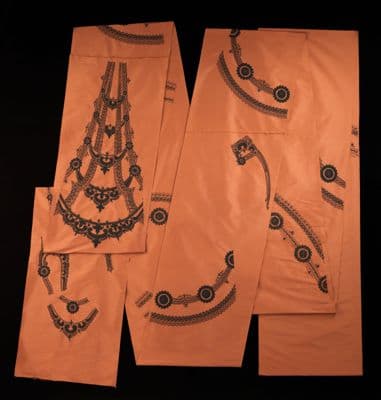
These pieces reveal the hidden architecture of Victorian silhouette-making: the coral silk shows where all that elaborate draping and gathering would fall over the body, while the cage bustle exposes the engineering marvel that made it possible.
Text63%
Image76%
Entity
Worn with·chemiseWorn with·corsetWorn with·petticoat
SHARED60 years · cross-category
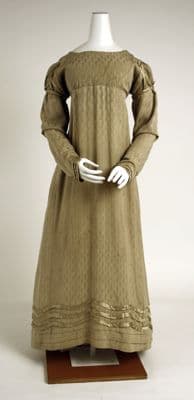
The Empire dress floats in a straight column from its high waistline, requiring nothing more than a light chemise underneath to achieve its classical silhouette, while the cage bustle creates an architectural scaffolding designed to thrust fabric dramatically backward into space.
Worn with·chemiseWorn with·corsetWorn with·petticoat
SHARED150 years · cross-culture · cross-category
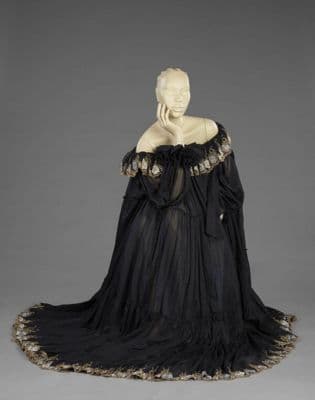
That Victorian cage bustle and the contemporary black gown share the same architectural ambition: both use structure to create drama from the back view, transforming the female silhouette into something theatrical and imposing.
Worn with·chemiseWorn with·corsetWorn with·petticoat
SHARED30 years · cross-culture · cross-category
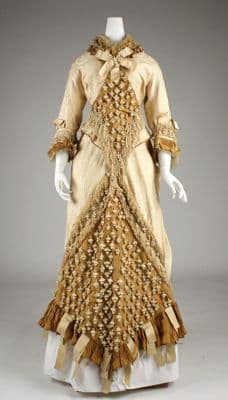
That 1870s bustle cage and the Belle Époque dress thirty years later share the same architectural obsession with projecting the female form into sculptural space. The bustle's steel hoops create the dramatic shelf that would support layers of fabric into an impossible cantilever, while the later dress translates that same structural ambition into surface decoration—its lattice of golden brown trim maps the ghost of the bustle's geometry directly onto the body.
Pull the Thread→
Follow this garment wherever the graph leads