THE MET
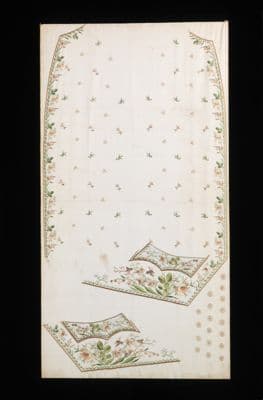
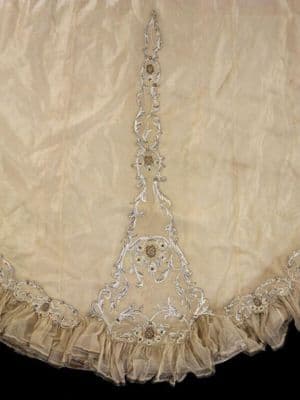
Cream Silk Habit à la Disposition Pattern Layout
Rococo · 1760s · French
Production
handmade
Material
silk
Culture
French
This is a French rococo-period textile design showing the layout pattern for a habit à la disposition, displayed as a flat arrangement on cream silk. The fabric features delicate scattered floral sprigs in pale green and gold throughout the field, with more elaborate floral borders along the edges. Two geometric sections at the bottom show the cutting pattern pieces, likely for sleeve or bodice components, decorated with the same small-scale floral motifs. The overall design demonstrates the 18th-century approach to economical fabric use, showing how decorative silk would be arranged and cut for a fitted garment while maximizing the ornamental impact of the woven or printed pattern.
dress
Connected To
Worn with·chemiseWorn with·corsetFunction·court-formal
SHARED110 years · cross-culture
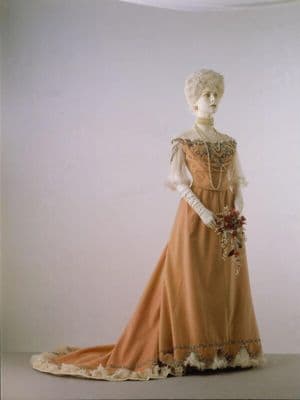
The cream silk pattern layout reveals the 18th-century French obsession with maximizing precious fabric — every scrap of embroidered silk accounted for in those geometric puzzle pieces that would become a *habit à la disposition*. Fast-forward 110 years to this Victorian ball gown, and you see the same reverence for luxury textiles, but now the sage brocade flows in generous, unbroken sweeps that would have horrified those thrifty Rococo seamstresses.
Text61%
Image73%
Worn with·chemiseWorn with·corsetFunction·court-formal
SHARED140 years
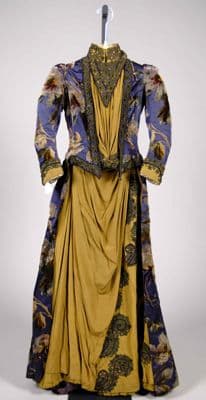
Worn with·chemiseWorn with·corset
SHARED120 years · cross-culture
Text63%
Worn with·chemiseWorn with·corset
SHARED140 years · cross-culture
Text57%
Echoes Across Time
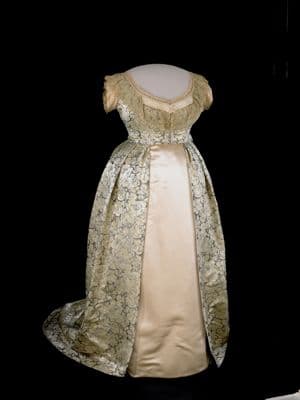
Victorian Late / Bustle → Rococo · 110yr56%
SHARED
The cream silk pattern layout reveals the 18th-century French obsession with maximizing precious fabric — every scrap of embroidered silk accounted for in those geometric puzzle pieces that would become a *habit à la disposition*. Fast-forward 110 years to this Victorian ball gown, and you see the same reverence for luxury textiles, but now the sage brocade flows in generous, unbroken sweeps that would have horrified those thrifty Rococo seamstresses.
Worn with·chemiseWorn with·corsetFunction·court-formal
Pull the Thread→
Follow this garment wherever the graph leads