THE MET
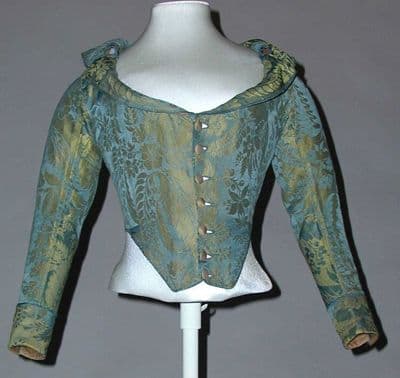
Sage Green Silk Brocade Caraco Jacket
Neoclassical Transition · 1780s · Italian
Production
handmade
Material
silk brocade
Culture
Italian
Influences
French court fashion · rococo textile traditions
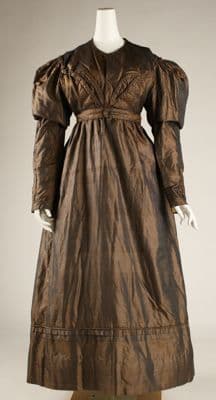
This caraco jacket displays the characteristic fitted bodice construction of 1780s women's formal wear, with a closely tailored torso that extends into a flared peplum hem. The silk brocade features an elaborate woven pattern in sage green and gold, creating a rich textural surface typical of luxury Italian silk production. The front closure consists of multiple small buttons extending from neckline to waist, while the sleeves are fitted through the forearm with decorative cuffs. The neckline is finished with self-fabric ruching or gathering that creates a soft frame around the décolletage. The jacket's construction demonstrates the transitional period between Rococo excess and emerging neoclassical restraint, maintaining ornate surface decoration while moving toward a more structured, geometric silhouette that would define the approaching Empire period.
jackettight fitscoop neckhip length
Connected To
Influences·French court fashionWorn with·staysTechnique·brocade-weaving
Echoes Across Time
Neoclassical Transition → Fin de Siecle / Gibson Girl · 120yr63%
SHARED
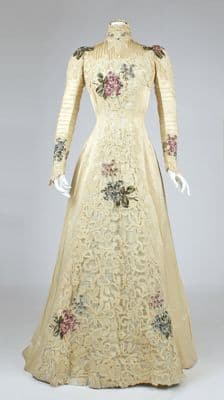
Both garments speak the same language of silk brocade luxury, but with a century's worth of evolution in how women wanted to inhabit their bodies. The 18th-century caraco's jade-green silk wraps the torso like armor—that rigid button front and fitted bodice designed to showcase the engineering of stays beneath—while the Edwardian tea gown flows in buttery cream silk that whispers of liberation, its high neck and fluid A-line suggesting a woman who could actually breathe.
Worn with·chemiseWorn with·petticoatTechnique·brocade-weaving
Pull the Thread→
Follow this garment wherever the graph leads