THE MET
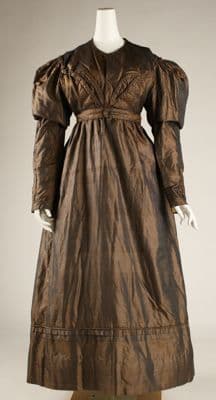
Bronze Brown Silk Taffeta A-Line Walking Dress
Romantic · 1820s · British
Production
handmade
Material
silk taffeta
Culture
British
Influences
Empire waistline · early Romantic sleeve fullness
This bronze-brown silk walking dress exhibits the transitional styling between Empire and Romantic periods. The bodice features a high empire waistline with fitted long sleeves that show subtle gathering at the shoulders, indicating the beginning of the romantic sleeve expansion. The V-shaped neckline is modest and practical for daywear. The skirt falls in controlled fullness from the high waist to ankle length, with decorative trim bands near the hem adding visual weight. The silk appears to have a lustrous taffeta weave that creates subtle surface variation through light reflection. The overall silhouette maintains the columnar empire line while incorporating early romantic elements in the sleeve treatment.
dressa-linehigh neckfloor length
Connected To
Influences·Empire waistlineWorn with·chemise
SHARED10 years · cross-culture · cross-category
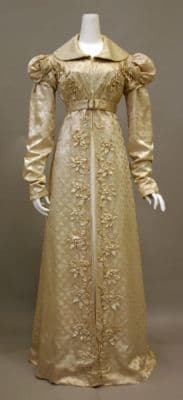
These two dresses trace the evolution of the Empire waist from Napoleon's court to Victoria's early reign, but their sleeves tell the real story. The golden redingote's restrained puffs at the shoulders whisper of neoclassical discipline, while the brown taffeta's dramatically inflated gigot sleeves announce the Romantic era's appetite for theatrical volume.
Pull the Thread→
Follow this garment wherever the graph leads