THE MET
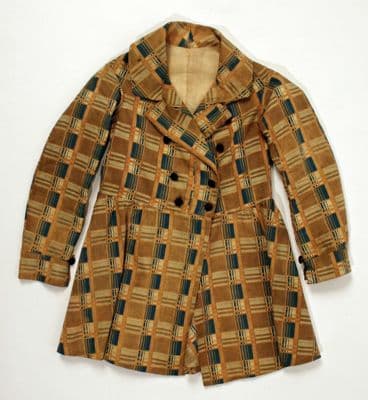
Golden Brown Navy Plaid Cotton Fitted Coat
Victorian Late / Bustle · 1870s-1880s · American
Production
ready-to-wear
Material
cotton plaid
Culture
American
Influences
Victorian fitted bodice construction · Scottish tartan plaid tradition
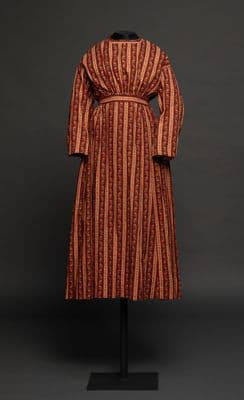
A fitted coat featuring a complex plaid pattern in golden brown, navy, cream, and rust tones. The garment displays typical Victorian tailoring with a fitted bodice that extends into a flared skirt section, creating the characteristic silhouette of the bustle era. The coat features a notched collar, double-breasted front closure with dark buttons, and long fitted sleeves. The plaid pattern runs in multiple directions, creating a sophisticated geometric design typical of American textile production during this period. The construction shows careful pattern matching at seams, indicating skilled tailoring. The coat's length extends to mid-thigh, and the flared lower section would accommodate the fashionable bustled silhouette underneath.
coata-lineknee length
Connected To
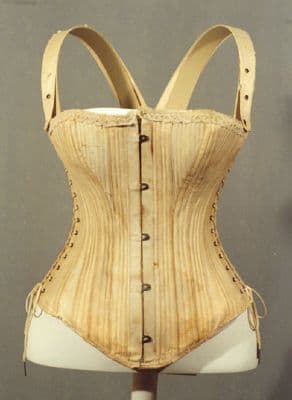
Worn with·bustleWorn with·chemiseWorn with·petticoat
SHAREDsame era · cross-culture · cross-category
Echoes Across Time
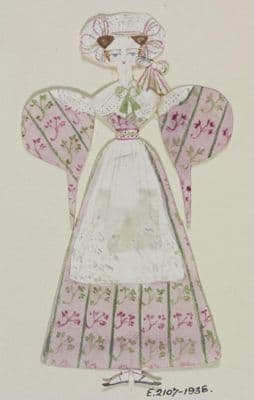
Victorian Late / Bustle → Romantic · 50yr57%
SHARED
That golden plaid coat and the watercolor dress sketch share the Victorian obsession with pattern-on-pattern layering, but they're separated by decades and an ocean of social change. The earlier Romantic dress shows delicate florals contained within clean geometric stripes, while the later bustle-era coat explodes into an all-over plaid that's both bolder and more democratic—cotton replacing silk, American practicality trumping British refinement.
Worn with·chemiseWorn with·corsetWorn with·petticoat
Pull the Thread→
Follow this garment wherever the graph leads