Romantic · 1830s · British
Production
handmade
Material
watercolor on paper
Culture
British
Influences
1830s leg-of-mutton sleeve · Romantic period silhouette
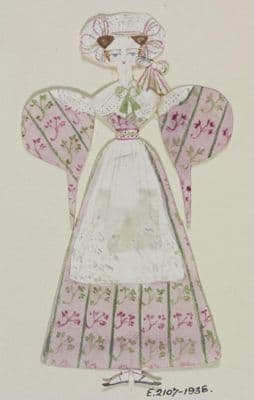
This paper doll depicts a woman wearing the characteristic silhouette of the 1830s Romantic period. The dress features dramatically oversized leg-of-mutton sleeves that balloon out from the shoulders before tapering at the wrists, creating the era's distinctive triangular upper body shape. The bodice is fitted and worn over what appears to be a corset, creating a narrow waistline that contrasts sharply with the sleeve volume. The skirt falls in a bell shape to ankle length. A white apron with decorative trim covers the front of the dress. The fabric shows a delicate pink and green striped or sprigged pattern typical of cotton day dress materials. Her elaborate white cap features ruffles and ribbons, representing the complex millinery fashionable for married women of the period.


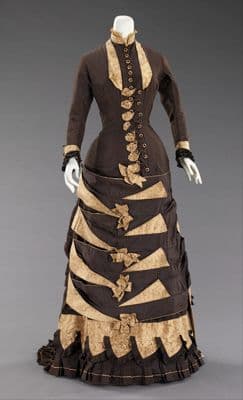
The chocolate-brown bustle dress with its diagonal bands of golden trim and the watercolor's pink-striped day dress with its crisp white apron share an obsession with horizontal interruption — both use repeating elements to break up the female form into manageable visual portions.

Follow this garment wherever the graph leads
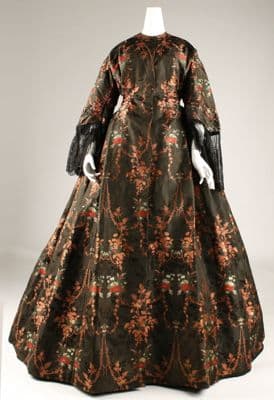
The chocolate-brown bustle dress with its diagonal bands of golden trim and the watercolor's pink-striped day dress with its crisp white apron share an obsession with horizontal interruption — both use repeating elements to break up the female form into manageable visual portions.
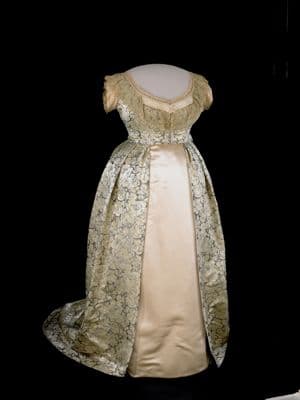
That sage brocade gown with its dropped shoulders and generous train represents the Victorian obsession with opulent surfaces—every inch worked in metallic thread like armor made of light. The watercolor dress, sketched decades earlier, shows the Romantic era's softer approach: those puffy sleeves and floral-sprigged apron speak to a time when women's fashion still flirted with pastoral fantasy rather than imperial grandeur.
The 1870s American bustle dress and this 1840s British day dress share the era's obsession with floral abundance, but express it through completely different silhouettes that reveal fashion's rapid evolution.
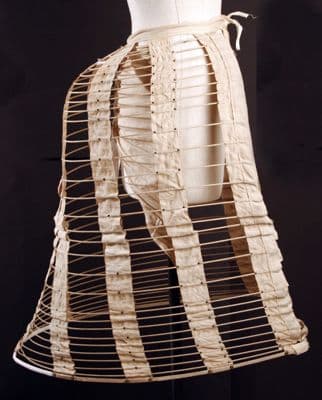
The cage bustle's engineered steel hoops and the Romantic dress's puffed sleeves both solve the same Victorian puzzle: how to create dramatic volume without crushing weight. Where the 1840s dress relies on gathered fabric and padding to balloon those sleeves into perfect spheres, the 1880s bustle strips away all pretense, revealing the naked architecture that was always lurking beneath layers of horsehair and cotton batting.

That sage brocade gown with its dropped shoulders and generous train represents the Victorian obsession with opulent surfaces—every inch worked in metallic thread like armor made of light. The watercolor dress, sketched decades earlier, shows the Romantic era's softer approach: those puffy sleeves and floral-sprigged apron speak to a time when women's fashion still flirted with pastoral fantasy rather than imperial grandeur.