THE MET
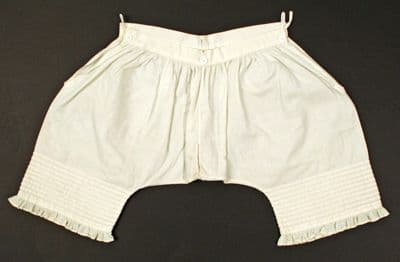
White Cotton Muslin Drawstring Pantaloons with Shoulder Straps
Victorian Early / Crinoline · 1850s-1890s · American
Production
handmade
Material
cotton muslin
Culture
American
White cotton muslin drawers featuring a high gathered waistband with drawstring closure and shoulder strap ties. The garment has a loose, bloomer-like silhouette with wide legs that gather into ruffled cuffs at mid-thigh length. The construction shows simple straight seams with functional gathering at the waist creating fullness through the hips and thighs. Small ruffled trim edges the leg openings. This undergarment represents the practical foundation layer worn beneath Victorian women's clothing, providing modesty and comfort under the era's voluminous skirts while allowing freedom of movement.
shortsbaggyabove-the-knee
Connected To
63%
Worn with·bustleWorn with·chemiseWorn with·petticoat
SHARED25 years · cross-culture · cross-category
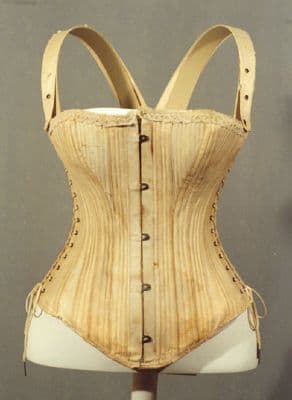
These two pieces reveal the hidden architecture of Victorian propriety, where the corset's rigid vertical boning and precise button closure imposed order on the female form while the drawers' loose, gathered cotton provided modesty beneath. The twenty-five years between them trace a shift from the earlier period's softer silhouettes (requiring only the drawers' basic coverage) to the later era's engineered curves that demanded the corset's structural intervention.
Text75%
Image76%
57%
Worn with·chemiseWorn with·corsetWorn with·petticoat
SHARED35 years · cross-category
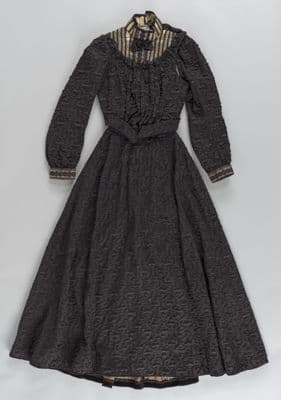
These two pieces bracket the great Victorian transformation from the billowing crinoline era to the fitted bustle period, yet both reveal the same obsession with controlling the female silhouette through layers.
57%
Worn with·chemiseWorn with·corsetWorn with·petticoat
SHARED35 years
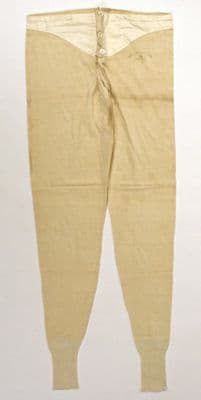
These two undergarments trace the Victorian obsession with coverage through radically different approaches to the same problem. The earlier pantaloons with their billowing muslin legs and drawstring waist create modesty through volume—all that fabric gathering and blousing to ensure no glimpse of actual leg shape beneath the crinoline. By contrast, the later union suit abandons the pretense of concealment, hugging every curve in knitted cotton that moves with the body rather than around it.
57%
Worn with·bustleWorn with·corset
SHARED25 years · cross-culture · cross-category
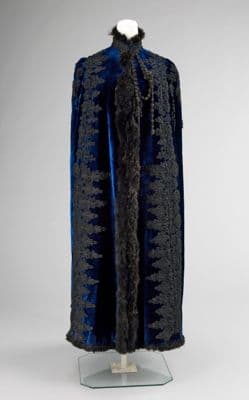
These two garments bookend the Victorian woman's relationship with concealment and revelation. The practical cotton drawers, with their generous gathered fabric and drawstring waist, provided the hidden foundation that allowed the ornate blue velvet cape to exist—without proper undergarments, the cape's dramatic silhouette would collapse into vulgarity.
Pull the Thread→
Follow this garment wherever the graph leads