THE MET
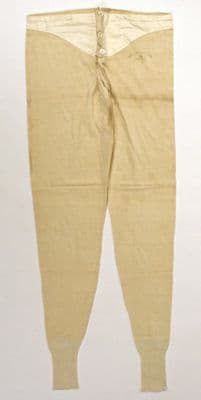
Cream Cotton Knit Union Suit Drawers
Fin de Siecle / Gibson Girl · 1890s · American
Production
ready-to-wear
Material
cotton knit
Culture
American
A cream-colored knitted cotton union suit featuring a full-length design with integrated legs that taper to fitted cuffs at the ankles. The garment displays a button-front closure extending from the neckline down the torso, with what appears to be a drop-seat construction typical of 1890s undergarments. The knitted fabric shows a fine gauge construction that would provide warmth and modesty beneath outer garments. The high neckline and long sleeves reflect the era's preference for complete body coverage in undergarments. The fitted silhouette follows the natural body line without excessive bulk, allowing it to sit smoothly under the corseted fashions of the Gibson Girl period.
pantstight fitfloor length
Connected To
Worn with·chemiseWorn with·corsetWorn with·petticoat
SHARED70 years · cross-culture · cross-category
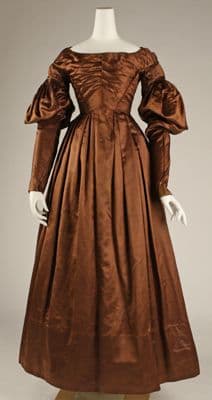
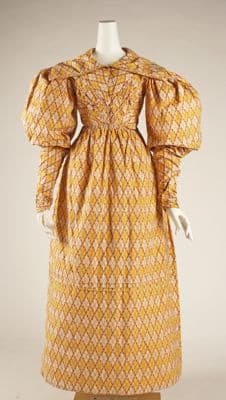
These two garments speak to the Victorian obsession with containment and release — the cream union suit's practical button-front closure and fitted legs creating the foundation for the golden dress's theatrical explosion of volume.
Text57%
Image73%
Entity
Worn with·chemiseWorn with·corsetWorn with·petticoat
SHARED40 years · cross-culture · cross-category
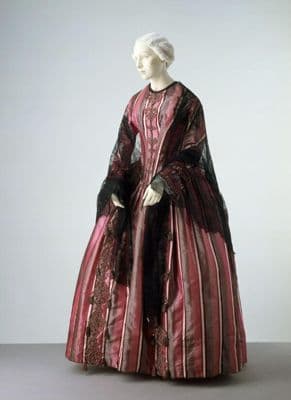
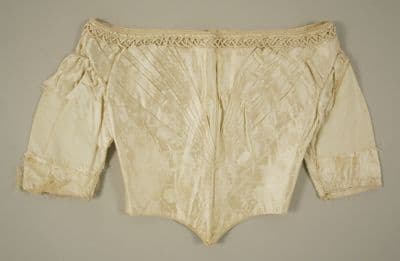
These cream cotton undergarments reveal how Victorian propriety demanded coverage even in the most private layers. The earlier bodice, with its precise off-shoulder cut and delicate trim, shows the 1850s obsession with shaping the torso into an hourglass even beneath the corset, while the later union suit represents the 1890s shift toward athletic practicality—its knitted fabric and full-body coverage designed for the New Woman who might actually move.
Worn with·chemiseWorn with·corsetWorn with·petticoat
SHARED20 years · cross-culture · cross-category
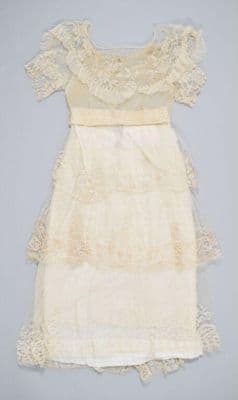
These cream confections are separated by class but united by the Belle Époque's obsession with layered femininity. The union suit's practical ribbed knit and button fly speak to the new woman's need for movement beneath her Gibson Girl silhouette, while the tea dress's cascading silk net ruffles and off-shoulder romance cater to leisurely afternoons in drawing rooms.
57%
Worn with·chemiseWorn with·corsetWorn with·petticoat
SHARED35 years
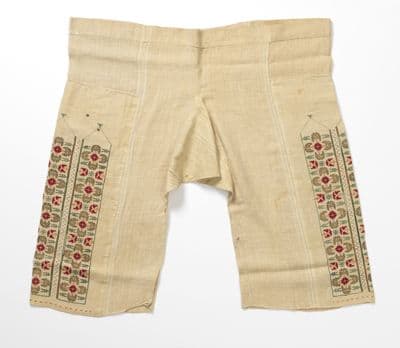
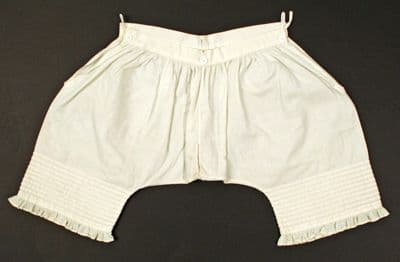
These two undergarments trace the Victorian obsession with coverage through radically different approaches to the same problem. The earlier pantaloons with their billowing muslin legs and drawstring waist create modesty through volume—all that fabric gathering and blousing to ensure no glimpse of actual leg shape beneath the crinoline. By contrast, the later union suit abandons the pretense of concealment, hugging every curve in knitted cotton that moves with the body rather than around it.
Pull the Thread→
Follow this garment wherever the graph leads