THE MET
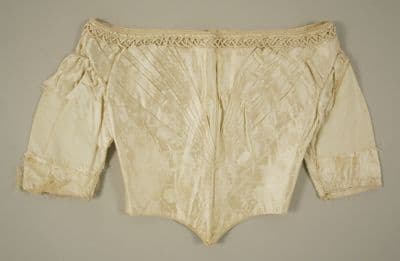
Cream Cotton Off-Shoulder Fitted Bodice
Victorian Early / Crinoline · 1850s · European
Production
handmade
Material
cotton
Culture
European
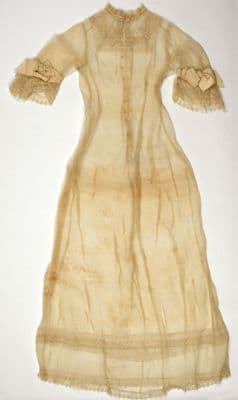
A cream-colored cotton bodice with off-shoulder construction and short sleeves that would sit beneath the outer dress. The garment features a fitted silhouette with visible boning channels running vertically through the torso to provide structure. Decorative braided trim edges the neckline in a scalloped pattern. The sleeves are gathered at the shoulders and cuffed at the wrists. A center front opening with what appears to be hook-and-eye or lacing closure allows for adjustment. The cotton fabric shows age-related discoloration typical of mid-19th century undergarments. This piece would have been worn over a chemise and corset as part of the layered foundation system required for 1850s dress silhouettes.
top/t-shirt/sweatshirttight fitoff-the-shoulderabove-the-hip
Connected To
Worn with·chemiseWorn with·corsetWorn with·petticoat
SHARED40 years · cross-culture · cross-category
These two pieces reveal how the off-shoulder neckline traveled through time as a consistent marker of feminine allure, even as everything else about women's dress transformed. The cream cotton bodice, with its tight-laced construction and delicate braided trim, speaks to the Victorian obsession with constraint and ornamentation—every inch calculated to compress and display.
Echoes Across Time
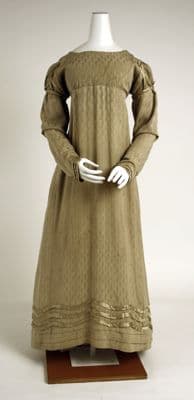
Victorian Early / Crinoline → Empire / Regency · 40yr58%
SHARED
These two pieces reveal how the off-shoulder neckline traveled through time as a consistent marker of feminine allure, even as everything else about women's dress transformed. The cream cotton bodice, with its tight-laced construction and delicate braided trim, speaks to the Victorian obsession with constraint and ornamentation—every inch calculated to compress and display.
Worn with·chemiseWorn with·corsetWorn with·petticoat
Pull the Thread→
Follow this garment wherever the graph leads