THE MET
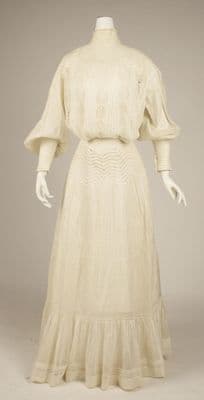
Cream Cotton Voile Edwardian Day Dress
Edwardian · 1900s · American
Production
handmade
Material
cotton voile
Culture
American
Influences
Gibson Girl silhouette
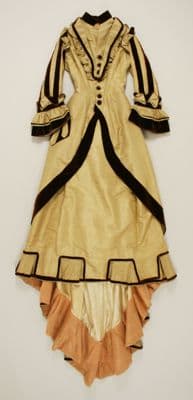
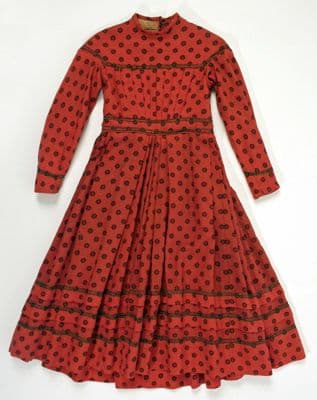
This Edwardian day dress features a high-necked bodice with three-quarter length sleeves that gather into fitted cuffs. The bodice appears to have a center-front closure and is fitted through the torso with subtle gathering at the waist. The skirt extends to floor length with a distinctive tiered construction, featuring multiple horizontal bands of fabric that create a layered, ruffled effect toward the hem. The lightweight cotton voile fabric drapes softly, creating gentle volume in the skirt while maintaining the characteristic S-curve silhouette of the early 1900s. The overall construction demonstrates the Edwardian preference for modest coverage combined with feminine detailing through textural elements rather than bold ornamentation.
dressfit and flarehigh neckfloor length
Connected To
Worn with·chemiseWorn with·corsetWorn with·petticoat
SHARED50 years · cross-culture · cross-category
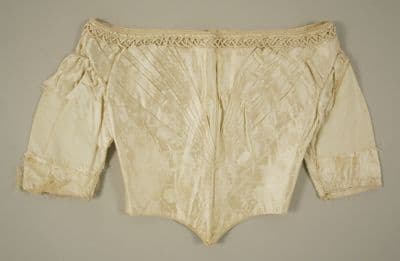
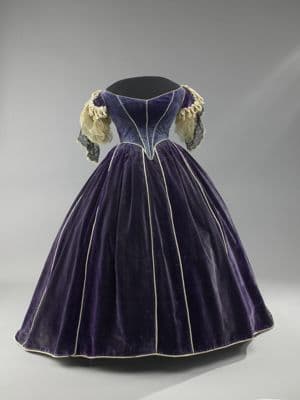
The Victorian bodice's tight-laced seduction and the Edwardian dress's demure high neck represent two opposing philosophies of feminine propriety, yet both deploy the same visual trick: cream cotton as a canvas for intricate surface work.
Pull the Thread→
Follow this garment wherever the graph leads