V&A
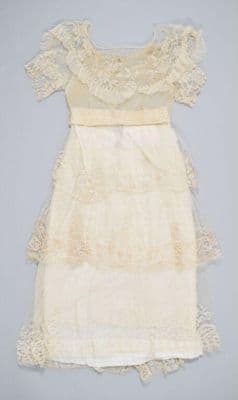
Cream Silk Net Tiered Tea Dress
Belle Epoque · 1910s · British
Production
handmade
Material
silk net over silk
Culture
British
Influences
Empire waistline revival · romantic Victorian lace traditions
This delicate Edwardian dress features a high-necked bodice with short puffed sleeves constructed from fine silk net layered over silk foundation. The bodice fits closely through the torso with a defined waistband positioned just below the natural waist. The skirt falls in three distinct tiers of graduated lengths, each edged with scalloped lace trim that creates textural depth and movement. The silk net overlay provides translucent coverage while maintaining the garment's ethereal quality. The construction demonstrates typical Edwardian preference for feminine detailing through layered fabrics and intricate lacework, creating a romantic silhouette suitable for refined daytime social occasions.
dressfit and flarescoop neckmidi
Connected To
Worn with·chemiseWorn with·corsetWorn with·petticoat
SHARED80 years · cross-culture · cross-category
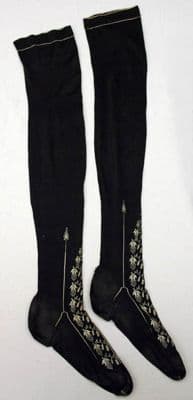
These pieces speak the same language of delicate rebellion against plainness—the stockings' climbing vine embroidery and the dress's layered lace tiers both use intricate handwork to transform simple silhouettes into something precious. The stockings' dark silk provides a dramatic canvas for white florals that would peek provocatively above boot tops, while the dress layers cream silk net like frosting, each tier edged with lace that catches light and shadow.
Echoes Across Time
Romantic → Belle Epoque · 80yr59%
SHARED
These pieces speak the same language of delicate rebellion against plainness—the stockings' climbing vine embroidery and the dress's layered lace tiers both use intricate handwork to transform simple silhouettes into something precious. The stockings' dark silk provides a dramatic canvas for white florals that would peek provocatively above boot tops, while the dress layers cream silk net like frosting, each tier edged with lace that catches light and shadow.
Worn with·chemiseWorn with·corsetWorn with·petticoat
Pull the Thread→
Follow this garment wherever the graph leads