THE MET
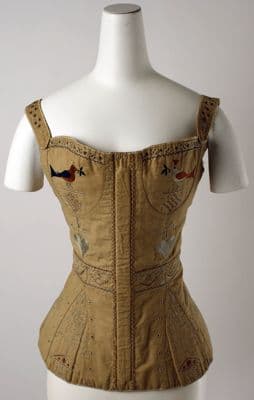
Tan Cotton Coutil Long-Line Corset
Romantic · 1820s · American
Production
handmade
Material
cotton coutil
Culture
American
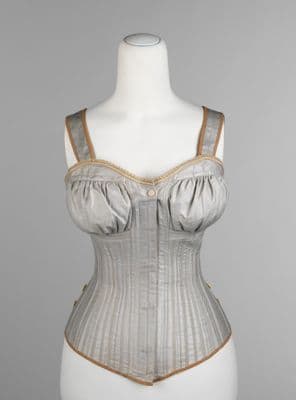
This tan cotton corset displays the characteristic long-line silhouette of the Romantic period, extending well below the natural waist to create the desired conical torso shape. The garment features a straight-across bust line with narrow shoulder straps and visible front busk closure running down the center. Multiple rows of decorative stitching create vertical channels throughout the bodice, likely housing whalebone or reed stays for structural support. The corset shows evidence of extensive wear with darkened areas around stress points and edges. Small decorative elements or reinforcement patches are visible on the bust area. The construction demonstrates typical early 19th-century corsetry techniques with hand-finished seams and careful attention to the geometric shaping required to achieve the fashionable silhouette of the 1820s-1830s.
top/t-shirt/sweatshirttight fitsweetheartabove-the-hip
Connected To
Worn with·chemiseWorn with·dressWorn with·petticoat
SHARED60 years · cross-category
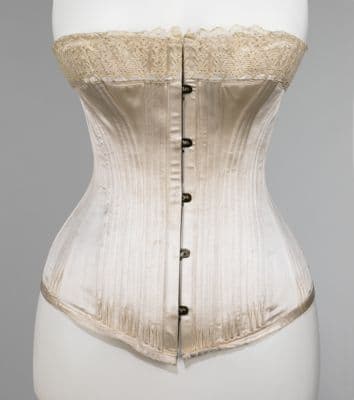
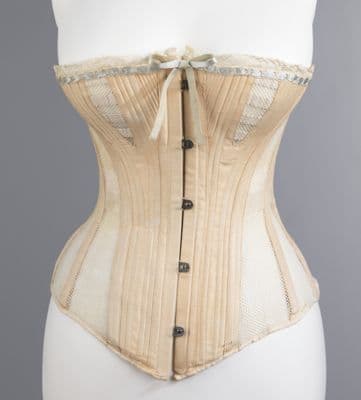
Both corsets speak the same structural language of cotton coutil and steel boning, but where the Victorian piece pursues the era's obsession with an impossibly cinched waist through its dramatic hourglass silhouette, the later romantic-era corset extends its grip downward over the hips in a longer, more forgiving line.
Pull the Thread→
Follow this garment wherever the graph leads