THE MET
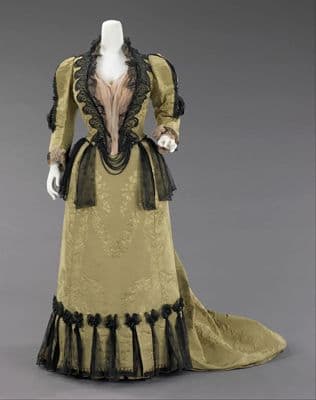
Olive Green Silk Damask Bustle Ensemble
Victorian Late / Bustle · 1870s-1880s · French
Production
haute couture
Material
silk damask
Culture
French
Influences
French Second Empire court dress · bustle cage structure
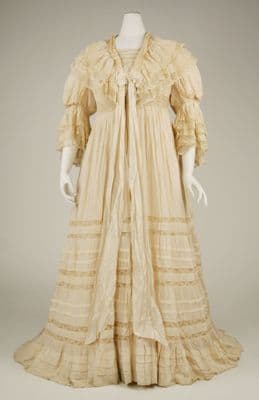
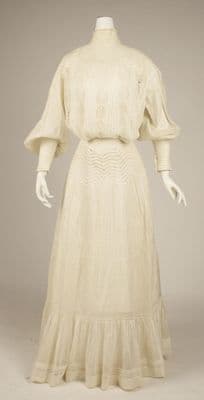
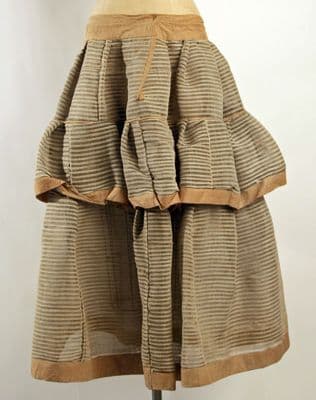
This French bustle ensemble features a fitted jacket with deep V-neckline and three-quarter sleeves, constructed from olive green silk damask with elaborate black trim and fringe detailing. The jacket displays characteristic 1870s proportions with a snug bodice that extends over the hips. The matching trained skirt shows the distinctive bustle silhouette with a fitted front and sides that extend into a substantial train. Black decorative elements include braided trim, tasseled fringe, and what appears to be jet beading or buttons arranged in geometric patterns. The silk damask fabric shows a subtle woven pattern typical of high-quality French textile production. The ensemble demonstrates the period's preference for rich surface ornamentation and the dramatic contrast between fitted torso and voluminous skirt characteristic of bustle fashion.
dresstrumpetplungingfloor length
Connected To
69%
Worn with·bustle padWorn with·chemiseWorn with·corset
Echoes Across Time
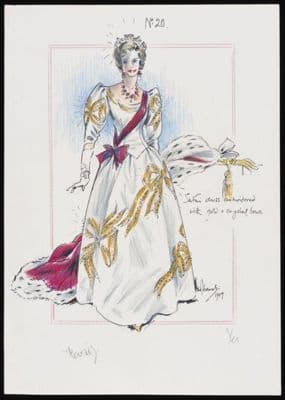
Victorian Late / Bustle → Elizabethan · 100yr65%
SHARED
The Victorian bustle gown and Elizabethan court dress share the same aristocratic DNA: both use elaborate trains and fitted bodices to transform the female body into a display of wealth and status. Where the Elizabethan gown spreads horizontally with its wide skirts and ermine-trimmed train, the Victorian version channels that same imperial energy vertically through its cascading bustle silhouette, both demanding physical space as a form of social power.
Worn with·corsetWorn with·petticoatTechnique·couture-construction
Pull the Thread→
Follow this garment wherever the graph leads