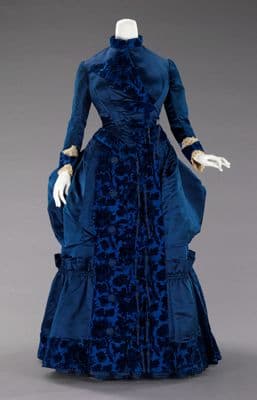
Victorian Late / Bustle · 1880s · French
Production
haute couture
Material
silk velvet
Culture
French
Influences
Second Empire French fashion · bustle cage support system
This afternoon dress exemplifies 1880s bustle fashion with its characteristic silhouette featuring a tightly fitted bodice and dramatic rear projection. The garment is constructed from rich navy silk velvet with intricate surface decoration created through contrasting pile directions or cut velvet technique. The high neckline features elaborate trim, while the long sleeves are fitted through the forearm. The skirt extends into a pronounced bustle shape with decorative panels and trim work cascading down the back. Multiple tiers of ruffles or flounces create textural interest at the hem. The overall construction demonstrates the period's emphasis on complex tailoring and luxurious materials for respectable daywear.
Follow this garment wherever the graph leads
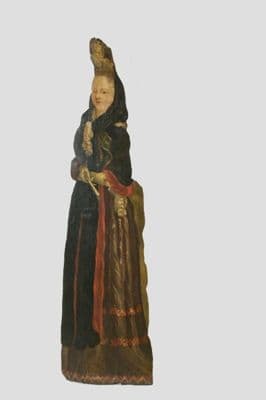
These two gowns speak the same language of aristocratic excess, separated by nearly two centuries but united in their devotion to silk's seductive power.
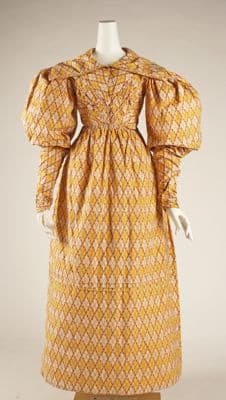
These two dresses reveal how Victorian women's daywear evolved from theatrical volume to architectural precision across six decades. The earlier golden dress deploys its massive gigot sleeves like fabric balloons, creating drama through sheer scale and that busy diamond brocade that catches light with every gesture, while the navy velvet number channels all its ambition downward into that cascading bustle train, using rich texture and precise pleating instead of pattern to command attention.
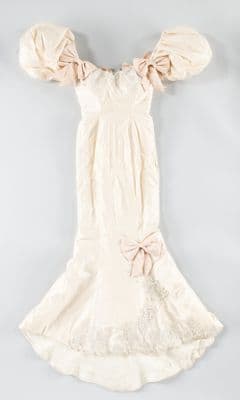
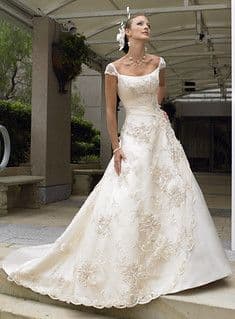
These two dresses share an obsession with surface texture as the primary vehicle for luxury, though they achieve it through opposite means. The Victorian velvet dress uses the fabric's inherent pile to create depth and richness, with those cascading ruffles and trim catching light like water, while the contemporary wedding gown relies on raised embroidery and appliqué to build dimension across its smooth organza surface.
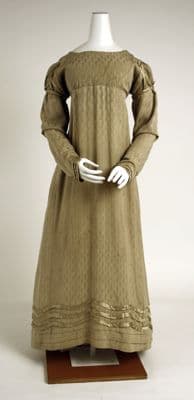
These two dresses reveal how women's fashion pivoted from Regency restraint to Victorian excess across seven decades. The olive silk's clean empire lines and minimal trim speak the language of neoclassical purity, while the navy velvet's cascading ruffles, fitted bodice, and bustle silhouette announce the Victorian obsession with architectural complexity and surface decoration.

These two dresses reveal how Victorian women's daywear evolved from theatrical volume to architectural precision across six decades. The earlier golden dress deploys its massive gigot sleeves like fabric balloons, creating drama through sheer scale and that busy diamond brocade that catches light with every gesture, while the navy velvet number channels all its ambition downward into that cascading bustle train, using rich texture and precise pleating instead of pattern to command attention.