FASHIONPEDIA
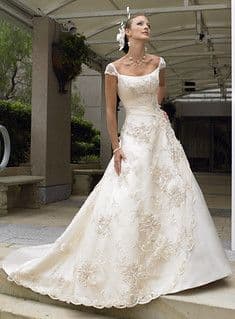
Ivory Silk Organza A-Line Cathedral Train Ballgown
2000s · 2000s · Western
Production
haute couture
Material
silk organza
Culture
Western
Movement
New Look · Y2K
Influences
Christian Dior New Look silhouette · Victorian ballgown proportions
This ballgown features a fitted bodice with cap sleeves and a sweetheart neckline, transitioning into an extremely full skirt with cathedral train. The ivory silk organza is overlaid with elaborate gold and champagne floral embroidery or appliqué work covering the entire garment. The bodice appears boned for structure, creating a defined waist that emphasizes the dramatic volume of the skirt. The floral motifs are large-scale and three-dimensional, suggesting raised embroidery or layered fabric applications. The silhouette exemplifies the New Look's emphasis on feminine curves and luxurious fabric consumption, with the skirt requiring substantial yardage and likely multiple crinolines for support.
dressa-linescoop neckfloor length
Connected To
Worn with·corsetWorn with·petticoatTechnique·couture-construction
Echoes Across Time
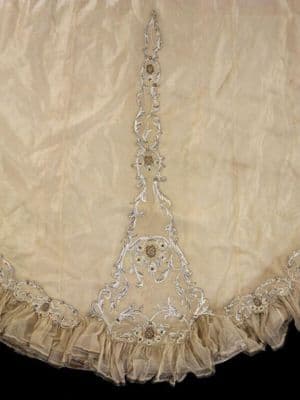
2000s → Edwardian · 100yr67%
SHARED
The Edwardian gown's intricate cutwork embroidery and ruffled hem find their echo a century later in the modern ballgown's scattered floral appliqués, both using negative space and dimensional texture to create movement across ivory silk. Where the 1900s dress builds drama through tiered construction and elaborate handwork that speaks to an era of domestic craftsmanship, the 2000s version achieves its presence through sheer volume and strategic placement of three-dimensional blooms.
Worn with·corsetWorn with·petticoatTechnique·couture-construction
Pull the Thread→
Follow this garment wherever the graph leads