THE MET
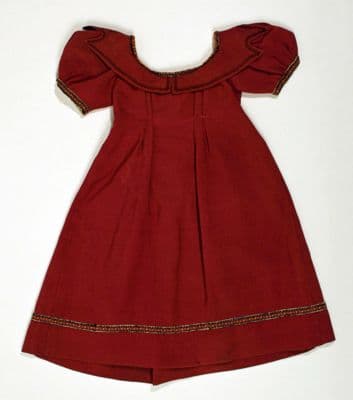
Burgundy Wool Empire Waist A-Line Dress
Romantic · 1840s · American
Production
handmade
Material
wool
Culture
American
Influences
1840s bell-shaped skirt silhouette
This burgundy wool dress exemplifies Romantic era silhouette with its fitted bodice and full, bell-shaped skirt that falls to mid-calf length. The bodice features a wide, curved neckline and short puffed sleeves gathered at the shoulders. The skirt is cut full and gathered at the waist, creating the characteristic triangular silhouette of the 1840s. Dark decorative trim, likely braid or ribbon, edges the neckline and hem, providing subtle contrast against the rich red wool. The construction appears to be machine-sewn with hand-finished details, reflecting the transitional period between hand and machine production in American garment making.
dressa-linescoop neckbelow the knee
Connected To
Worn with·chemiseWorn with·corsetWorn with·petticoat
SHARED40 years · cross-culture · cross-category
Echoes Across Time
Victorian Late / Bustle → Romantic · 40yr57%
SHARED
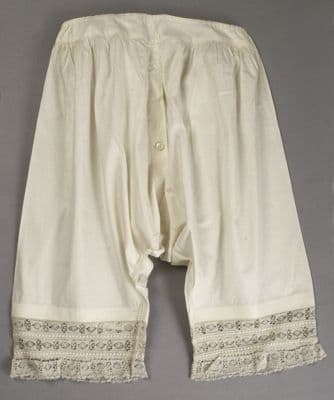
These garments share the quiet language of domestic intimacy, though they speak from different rooms of the house. The Victorian drawers, with their crisp lace trim and practical button fly, were hidden architecture—engineered to disappear beneath layers of propriety while the burgundy dress announces itself with that bold empire waist and confident A-line sweep.
Worn with·chemiseWorn with·corsetWorn with·petticoat
Pull the Thread→
Follow this garment wherever the graph leads