THE MET
Cream Cotton Victorian Drawers with Drawstring Waist
Victorian Late / Bustle · 1870s-1890s · American or European
Production
handmade
Material
cotton
Culture
American or European
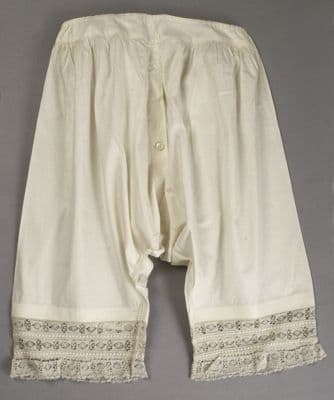
These Victorian women's drawers feature a loose, gathered construction with a drawstring waist closure secured by mother-of-pearl buttons. The cotton fabric creates a comfortable, breathable undergarment that extends to mid-thigh length. The legs are finished with bands of delicate white lace trim in a geometric pattern, adding decorative detail to this practical foundation garment. The wide-leg silhouette allows for ease of movement while accommodating the voluminous skirts of the bustle era. The construction shows typical Victorian undergarment features including the front button closure and gathered waistband that would sit beneath a corset.
pantsbaggybelow the knee
Connected To
61%
Worn with·chemiseWorn with·corsetWorn with·petticoatTechnique·lacework
SHARED30 years · cross-culture · cross-category
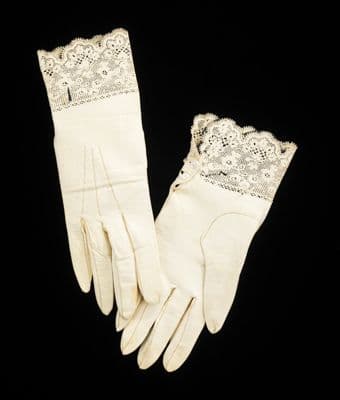
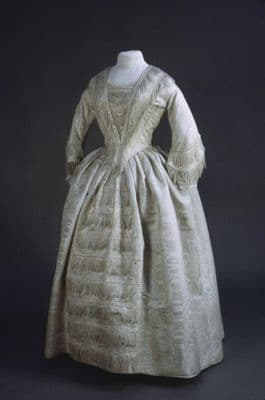
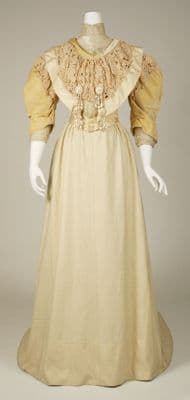
These two garments reveal the Victorian obsession with lace as the ultimate marker of refinement, whether hidden or displayed. The drawers' delicate bands of insertion lace at the hem were meant for no one's eyes but the wearer's own—a private luxury that speaks to the era's belief that proper ladies should be beautiful down to their most intimate layers.
Text69%
Image
Worn with·chemiseWorn with·corsetWorn with·petticoatTechnique·lacework
58%
Worn with·chemiseWorn with·corsetWorn with·petticoat
SHARED25 years · cross-culture · cross-category
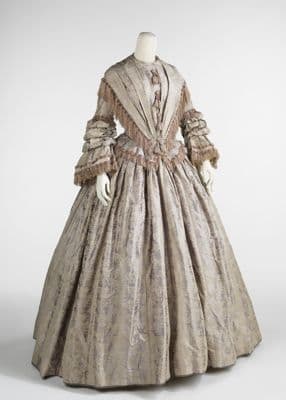
These two garments reveal the Victorian obsession with hidden luxury—the drawers' delicate lace trim at the hem mirrors the dress's subtle brocade patterning, both speaking to an era when even unseen garments demanded refinement. The drawers' generous cut through the seat and thighs would have accommodated the dress's massive crinoline cage, creating that perfect bell silhouette where fabric pools and swells without a hint of the body beneath.
Worn with·chemiseWorn with·corsetWorn with·petticoat
SHARED40 years · cross-culture · cross-category
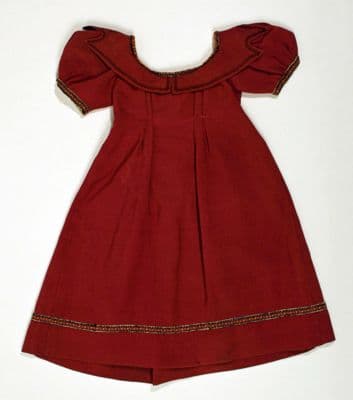
These garments share the quiet language of domestic intimacy, though they speak from different rooms of the house. The Victorian drawers, with their crisp lace trim and practical button fly, were hidden architecture—engineered to disappear beneath layers of propriety while the burgundy dress announces itself with that bold empire waist and confident A-line sweep.
Echoes Across Time
Victorian Late / Bustle → Romantic · 40yr57%
SHARED
These garments share the quiet language of domestic intimacy, though they speak from different rooms of the house. The Victorian drawers, with their crisp lace trim and practical button fly, were hidden architecture—engineered to disappear beneath layers of propriety while the burgundy dress announces itself with that bold empire waist and confident A-line sweep.
Worn with·chemiseWorn with·corsetWorn with·petticoat
Pull the Thread→
Follow this garment wherever the graph leads