THE MET
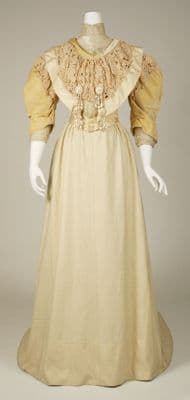
Pale Yellow Silk Crepe A-Line Tea Gown
Fin de Siecle / Gibson Girl · 1890s · French
Production
haute couture
Material
silk crepe
Culture
French
Influences
leg-of-mutton sleeve · Gibson Girl silhouette
This 1890s formal dress exemplifies the Gibson Girl silhouette with its characteristic fitted bodice and elaborate sleeve treatment. The pale yellow silk crepe construction features a high neckline adorned with extensive ruffled trim and lace detailing that cascades down the front in decorative tiers. The sleeves demonstrate the period's signature leg-of-mutton shape, fitted tightly at the forearms but dramatically puffed at the shoulders. The bodice maintains a close fit through the torso, transitioning to a full-length skirt that falls in gentle folds to the floor. The surface is enriched with intricate lacework and gathered fabric treatments that create textural interest while maintaining the refined aesthetic expected of French couture during this period.
dressa-linehigh neckfloor length
Connected To
Worn with·chemiseWorn with·corsetWorn with·petticoatFunction·
Echoes Across Time
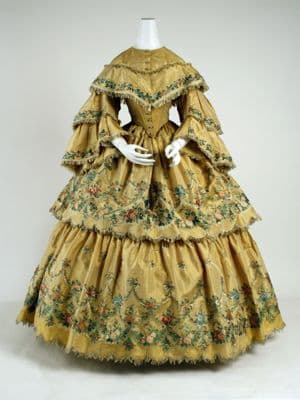
Fin de Siecle / Gibson Girl → Victorian Early / Crinoline · 40yr58%
SHARED
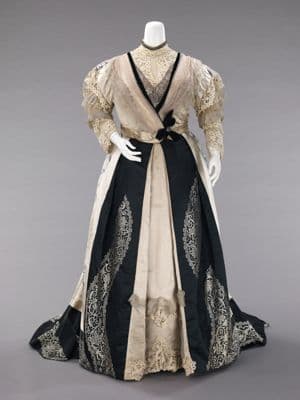
These two golden silk confections reveal how the Victorian obsession with layered ornamentation evolved into Edwardian restraint. The earlier crinoline dress drowns in tiered ruffles and floral trim that cascade down its bell-shaped skirt like a textile waterfall, while the fin de siècle tea gown concentrates all its decorative energy into that spectacular lace bib at the neckline, letting the rest of the silhouette flow in clean, uninterrupted lines.
Worn with·chemiseWorn with·corsetWorn with·petticoat
Pull the Thread→
Follow this garment wherever the graph leads