V&A
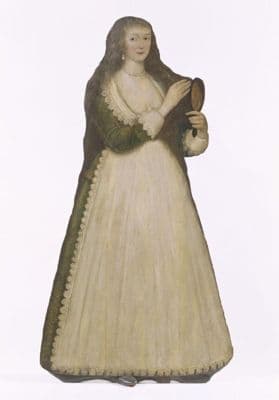
Cream Silk Taffeta Baroque Gown with Square Neckline
Baroque · 1640s · English
Production
handmade
Material
silk taffeta
Culture
English
Influences
English court fashion · Continental European formal dress
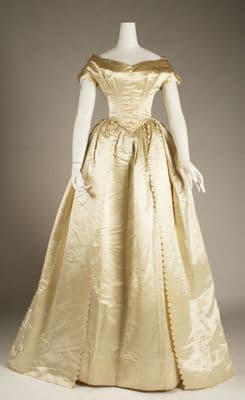
This Baroque-era gown features a fitted bodice with a square neckline and full, floor-length skirt characteristic of 1630s-1640s English court fashion. The cream silk taffeta is trimmed with olive green decorative elements along the bodice edges and skirt hem. The bodice appears to have a pointed waist with what looks like decorative trim or ribbon work. The sleeves are fitted to the elbow. The figure holds a hand mirror, a common accessory for wealthy women of this period. The gown's silhouette shows the transition from earlier Renaissance styles to the fuller Baroque aesthetic, with its emphasis on rich fabrics and decorative contrast trim.
dressfit and flaresquare necklinefloor length
Connected To
Worn with·chemiseWorn with·corsetFunction·court-formal
SHARED220 years · cross-culture
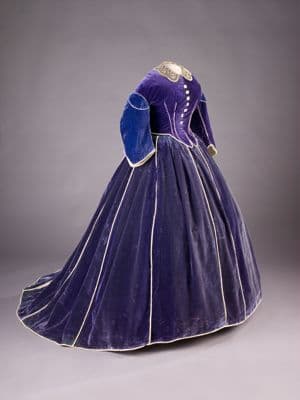
The velvet Victorian gown and the baroque silk taffeta dress are separated by two centuries but united by the same architectural ambition: transforming the female body into a monument. The Victorian dress achieves this through its dramatic train and fitted bodice that creates an hourglass silhouette, while the baroque gown uses its square neckline and voluminous skirt to frame the torso like a classical pedestal.
Echoes Across Time
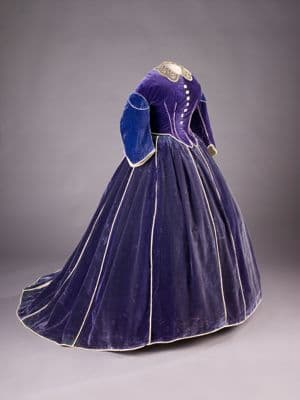
Victorian Late / Bustle → Baroque · 220yr57%
SHARED
The velvet Victorian gown and the baroque silk taffeta dress are separated by two centuries but united by the same architectural ambition: transforming the female body into a monument. The Victorian dress achieves this through its dramatic train and fitted bodice that creates an hourglass silhouette, while the baroque gown uses its square neckline and voluminous skirt to frame the torso like a classical pedestal.
Worn with·chemiseWorn with·corsetFunction·court-formal
Pull the Thread→
Follow this garment wherever the graph leads