SMITHSONIAN
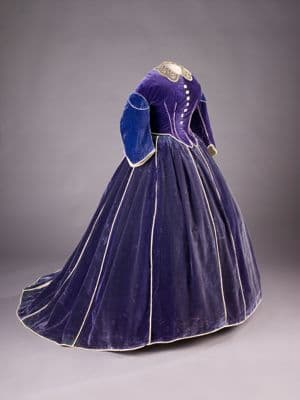
Deep Purple Silk Velvet Fit and Flare Dress
Victorian Late / Bustle · 1860s · American
Production
haute couture
Material
silk velvet
Culture
American
Influences
French Second Empire fashion
This formal 1860s dress features a fitted bodice with long sleeves and a dramatically full skirt supported by a crinoline cage. The rich purple silk velvet creates a luxurious surface with deep pile texture. White lace or trim accents the neckline, cuffs, and front closure. The bodice is closely fitted through the torso with a pointed waist, typical of mid-Victorian construction. Multiple small buttons run down the front opening. The skirt extends in a perfect bell shape from the natural waistline, requiring substantial understructure to achieve this silhouette. The sleeves are fitted through the arm with slight fullness at the shoulder, characteristic of 1860s tailoring.
dressfit and flareround neckfloor length
Connected To
Worn with·chemiseWorn with·drawers
LINEAGEsame era→ directed
Lineage: “dress reform movement”
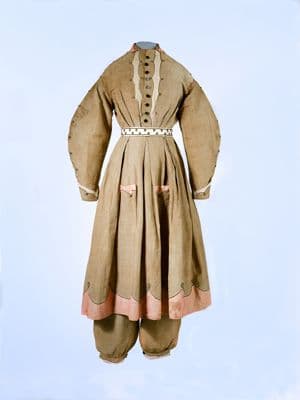
These two garments capture the Victorian woman's impossible choice between beauty and movement. The purple velvet dress, with its trained skirt and tight-fitted bodice, represents the suffocating ideal that dress reformers railed against—every pearl button and sweep of fabric designed to restrict and display.
Echoes Across Time
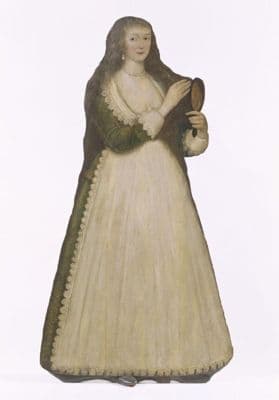
Victorian Late / Bustle → Baroque · 220yr57%
SHARED
The velvet Victorian gown and the baroque silk taffeta dress are separated by two centuries but united by the same architectural ambition: transforming the female body into a monument. The Victorian dress achieves this through its dramatic train and fitted bodice that creates an hourglass silhouette, while the baroque gown uses its square neckline and voluminous skirt to frame the torso like a classical pedestal.
Worn with·chemiseWorn with·corsetFunction·court-formal
Pull the Thread→
Follow this garment wherever the graph leads